
























Main content
Vietnam sets an example
Context
The world is ageing rapidly, and people are living longer. By 2030, there will be 1.4 billion people over the age of 60 (16% of the world population). In Vietnam, this percentage will even reach nearly 20% in 2030. Whilst this is a positive development, the gap between life expectancy and healthy life expectancy is widening. People grow older but live longer with chronic diseases. Non-communicable diseases (NCDs) are responsible for 74% of all deaths globally and are the leading cause of disability. In Vietnam, this percentage is even 80% and still increasing.
Recently, the National Assembly of Vietnam approved a new Population Law and a new Preventive Health Law aiming at improved health throughout the life course. [1] The Preventive Health Law guarantees free nationwide health checks and screening. It adds measures to prevent non-communicable diseases, mental health conditions, and malnutrition, and updates infectious disease control based on Covid-19 lessons.
Community-based prevention
In Vietnam, community-based prevention of NCDs was already organised before adoption of the new laws and was part of the National Health Strategy. Health stations (the community level clinics) provide screening for NCDs and work together with large-scale organisations, like Farmers Union, Women’s Union, Veteran Association, and Association of the Elderly to mobilise people for NCD screening activities. These organisations play an important role in Vietnam for improving the health and well-being of the population.
The National Association of the Elderly mobilises Intergenerational Self-Help Clubs (ISHCs) at village level – clubs that empower older adults to organise small business development, social and cultural engagement, and community-based healthcare. Generally, an ISHC has around 60 members. The model of the ISHCs is based on a comprehensive and integrated approach to socio-economic issues and determinants of health. The model is called the older people’s association model and has been applied in many LMICs (see Figure 1). It has been developed and implemented with the support of HelpAge International, an international network organisation advocating the rights of older people Several studies have shown it to be effective in addressing social determinants of health. [2]
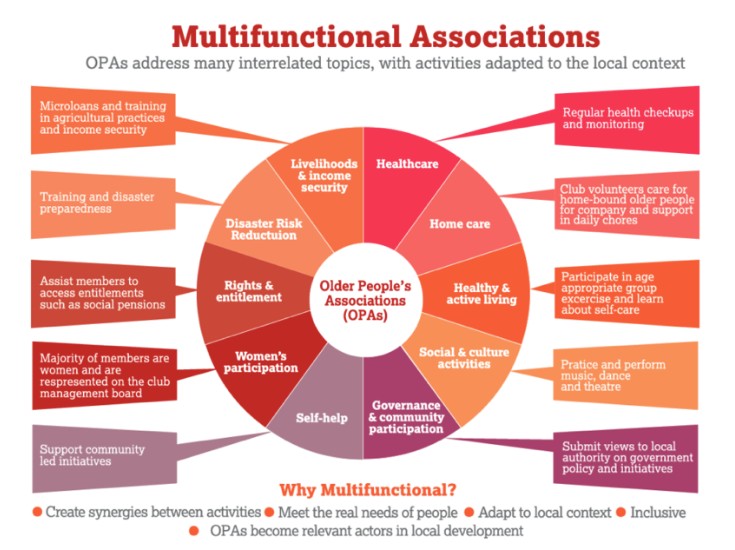
Figure 1. Older People Association model (www.helpage.org)
In 2019, community-based screening for NCDs was introduced in the Intergenerational Self-Help Clubs. This screening was primarily for hypertension and diabetes, but also other chronic conditions were addressed. The screening was organised with health education activities and social activities like gymnastics and cooking classes.
Impact evaluation
HelpAge performed research into the impact of ISHCs on NCDs and health, in close collaboration with the University Medical Centre in Groningen, the University Groningen (the Netherlands), the University of Passau (Germany), the Trnava University (Slovak Republic) and the Health Policy and Strategy Institute of the Ministry of Health in Vietnam.
Community volunteers and health station workers organised health education and joint activities to improve lifestyle, like gymnastics and cooking classes. This resulted in increased knowledge and motivation for healthier lifestyles of members. Results of the effect of these, and other interventions, were published in international journals. [3, 4, 5, 6] Furthermore, between 46% and 83% of ISHCs reached the vulnerable older population, with mostly women and people older than 70 years participating. Differences in reaching vulnerable people were attributed to the commitment of the community leaders in the interventions. In around 25% of the screened persons, hypertension was detected, and in 5% diabetes was identified, particularly in persons who were not aware of having a disease. Early referral led to early diagnosis and treatment.
Members of ISHCs indicated high satisfaction with the community groups. Over a period of three years, 74%–99% participated at least two times in local screening and six times in community health-promoting activities. [4] Implementation of an NCD screening app by ISHC volunteers was an effective way to improve community-led NCD screening. However, ISHC health volunteers must be trained and supervised to record, report, and manage the screening data. [5] The screening and health education activities were implemented for too short a time to measure the impact on life expectancy.
Integration in healthcare package
Based on this research, the Government of Vietnam concluded that the implementation of the ISHC model in Vietnam is promising regarding its promotion of health and may help to tackle the needs of an ageing population. As a result, the approach is included in the national prevention strategy and the model is now being expanded to 12,000 communities across the country. [7]
Global needs
People over 60 years in Low- and Middle-Income Countries (LMICs) are the age group most at risk from NCDs but are often left behind in policy and practice. Millions of older people face barriers to accessing essential health and care services due to the availability, accessibility and quality of services, as well as ageism in their funding, design and delivery. The healthcare systems in LMICs still focus mostly on infectious diseases and maternal and child health despite the changing health and care needs of the population. Self-organisation of older people can be an answer to improve prevention and early detection of NCDs.
Global network of organisations working with and for older people
HelpAge International leads a global network with and for people over 60 years, with a special focus on LMICs. To catalyse action and advance progress on healthy ageing, HelpAge International and over 150 partners globally launched the HelpAge Healthy Ageing Platform [8] to share knowledge and drive collective action with and for older people.
Based on the experiences in Vietnam, HelpAge International and network members worked together to develop training modules for community-based promotion and care. [9] The manuals are suitable for organising community organisations and for training volunteers. They are available to be used, translated, adapted and contextualised by all. Community empowerment is the strongest strategy to stimulate healthy ageing.
Experiences are also shared through the Knowledge Action Portal of the WHO [10] and the Global NCD alliance. [11] The aim of these platforms and networks is to strengthen the knowledge base on effective NCD prevention and control in the context of human rights. Vietnam has made a significant contribution and is one of the lead countries in community strategies for improving health and wellbeing.
References
- https://hanoitimes.vn/vietnam-approves-major-population-health-reforms-to-address-ageing.932599.html
- https://sdgs.un.org/partnerships/promoting-inclusive-sustainable-development-improve-well-being-disadvantaged-groups
- Fritz M, Grimm M, Hanh HTM, Koot JAR, Nguyen GH, Nguyen T, et al. Effectiveness of community-based diabetes and hypertension prevention and management programmes in Indonesia and Viet Nam: a quasi-experimental study. BMJ Global Health. 2024;9:e015053. https://doi.org/10.1136/bmjgh-2024-015053
- Pardoel ZE, Reijneveld SA, Lensink R, Postma M, Thuy TB, Viet NC, Phuong LNT, Koot JAR, Landsman JJA. The implementation of community-based programs in Vietnam is promising in promoting health. Front Public Health. 2023 Jun 20;11:1182947. doi: 10.3389/fpubh.2023.1182947. PMID: 37415708; PMCID: PMC10322193.
- Pardoel ZE, Reijneveld SA, Postma MJ, Lensink R, Koot JAR, Swe KH, Van Nguyen M, Pamungkasari EP, Tenkink L, Vervoort JPM, Landsman JA. A Guideline for Contextual Adaptation of Community-Based Health Interventions. Int J Environ Res Public Health. 2022 May 10;19(10):5790. doi: 10.3390/ijerph19105790. PMID: 35627327; PMCID: PMC9141251.
- Nong TTT, Nguyen GH, Lepe A, Tran TB,Nguyen LTP, Koot JAR Challenges and Opportunities in Digital Screening for Hypertension and Diabetes Among Community Groups of Older Adults in Vietnam: Mixed Methods Study J Med Internet Res 2024;26:e54127 doi: 10.2196/54127 PMID: 39622043 PMCID: 11650079
- https://www.helpage.org/news/vietnams-ishcs-win-national-recognition/
- https://www.helpage.org/what-we-do/healthy-ageing/healthy-ageing-platform/
- https://www.helpage.org/health-and-care/
- https://knowledge-action-portal.com/en
- https://ncdalliance.org
Caitlin Wald, MPH, transition lead, former head of health programmes, HelpAge International, Chiang Mai, Thailand
Poppy Walton, MPH, community healthcare advisor, HelpAge International