









Main content
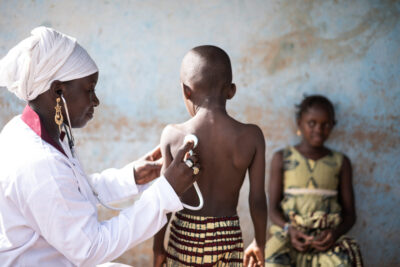
When I arrived on Bonaire a few years ago as a Global Health and Tropical Medicine physician (AIGT), I did not expect that this small island in the Dutch Caribbean would become the place where so many aspects of my professional journey would come together. But that is exactly what happened. My path did not start on Bonaire though, as it started in Sierra Leone, where I worked as a clinician and served as the programme coordinator of a surgical training programme. It was there that I first realised that meaningful health gains rarely come from clinical care alone. They emerge from the strength of the health system behind it.
In Sierra Leone, I saw, on a daily basis, how severe health outcomes were linked to vulnerable structures: weak preventive services, limited surveillance, vulnerable primary care, and systems that struggled to absorb shocks. That experience taught me that the role of a global health doctor is inseparably connected to the field of public health: not as an abstract policy field, but as a practical and often lifesaving discipline. With that insight and a Master in International Health, I continued my professional journey.
After several more steps, I eventually found my way to Bonaire, where I first worked clinically in the local hospital. Yet, it quickly became clear that my curiosity, motivation and system‑focused way of thinking were a better suited to the public health department. I made the transition to the public health service Bonaire in February 2022, and it immediately felt like the right place.
Working in public health on Bonaire is a unique experience. The island is beautiful, warm and diverse, but it also faces health challenges that clearly exceed those of the European Netherlands. Rates of overweight and obesity are high, mental health concerns often surface late, structured sexual health programmes have been missing for many years, and vector‑borne diseases such as dengue and chikungunya pose a continuous threat.[1] In this context, the broad skill set of a global health physician becomes not only useful, but essential.
Public health work on Bonaire means switching roles constantly. One moment you are preparing for a possible chikungunya outbreak, the next you are helping to develop a population health survey, coordinating the response to a suspected measles case, or working with the Dutch National Institute for Public Health and the Environment (RIVM) to investigate potential environmental health risks. In the meantime, our GGD (municipal health service) built a sexual health clinic, strengthened health promotion in schools, and improved outbreak response structures. In times of crisis, I also coordinate the island’s medical emergency network, which may involve responding to flooding or dealing with oil washing ashore from a tanker near Trinidad. The scope is wide, and the responsibilities are significant – especially in a small setting where tasks per professional are much broader than in municipalities in the Netherlands.[2]
All of this takes place within a wider context of inequality. A recent court ruling that the Dutch state does not adequately protect Bonaire against climate change was, for many residents, a recognition of something long felt: a form of “second‑class citizenship”.[3] This inequality is also visible in parts of the health system. For me, this is not discouraging – rather, it strengthens my motivation. It feels like a privilege to contribute, with full commitment, to closing these gaps and working toward a future in which the people of Bonaire have health opportunities that truly reflect their status as Dutch citizens.
And then there is the island itself: the natural environment, the sense of community and the cultural diversity make the work rich and rewarding. As someone who thrives in multicultural settings and enjoys connecting across systems, communities and disciplines, I feel very much at home here.
My time on Bonaire has deepened my conviction that the link between global health and public health is not coincidental but fundamental. It is in places where systems are vulnerable and inequity is tangible that global health physicians can make a meaningful difference. Bonaire has captured my heart – and continues to show me, every day, why this work matters.
References
- Rapportage Volksgezondheid Bonaire (in Dutch).
- Since 10 October 2010, Bonaire has held the constitutional status of a public entity within the Kingdom of the Netherlands. The island is an integral part of the Netherlands and is often informally described as a “special” municipality. In practice, Bonaire functions in many ways like a Dutch municipality, although its geographic distance from the rest of the Netherlands gives it a distinct status with its own specific legislation.
- https://www.rechtspraak.nl/organisatie-en-contact/organisatie/rechtbanken/rechtbank-den-haag/nieuws/nederlandse-staat-beschermt-inwoners-bonaire-onvoldoende-tegen-klimaatverandering (in Dutch).