













Main content
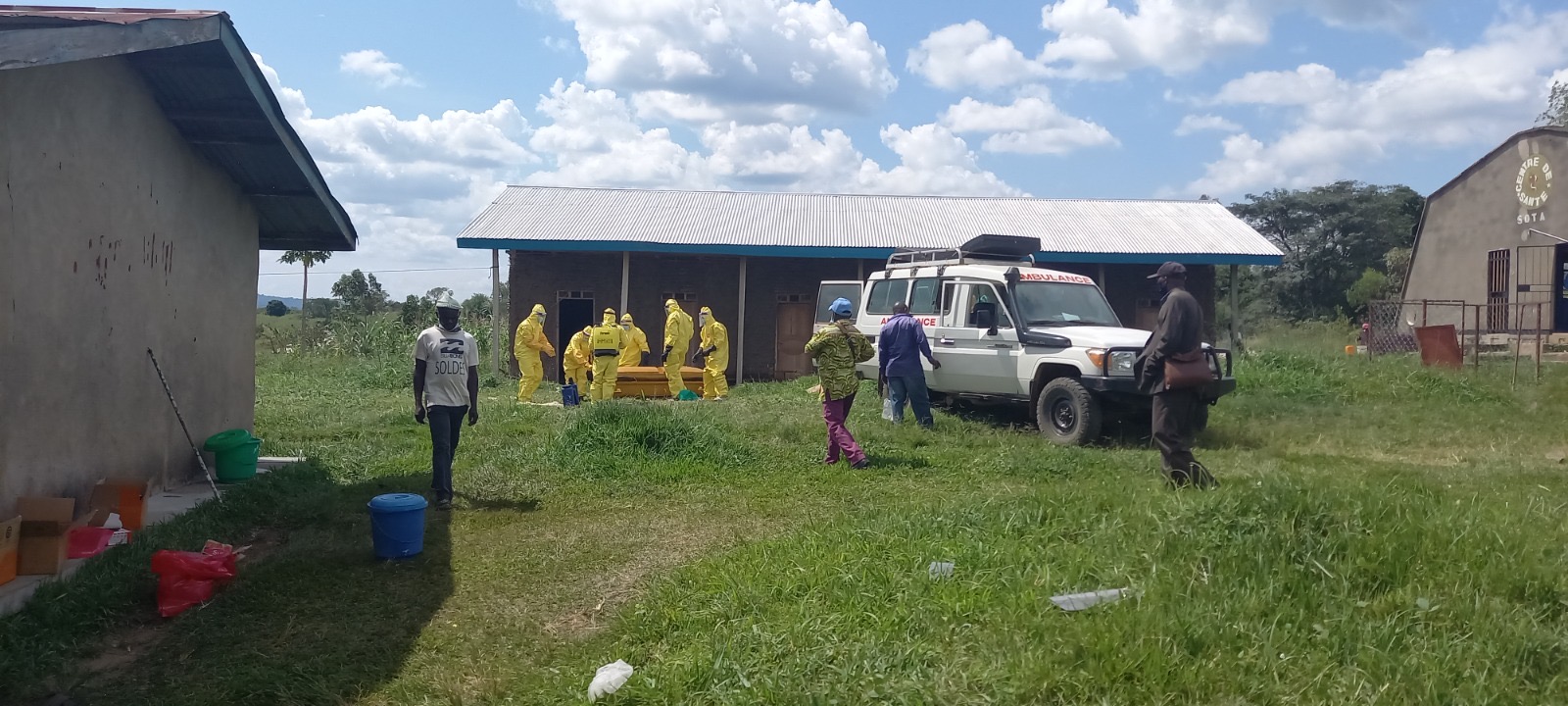
On 15 May, it was announced that a new Ebola outbreak was raging in the Democratic Republic of the Congo. This time, it was in the province where I live, Ituri. It had already been clear for several weeks that something was going on. We had heard rumours of a mystic coffin spreading a disease. Some videos of fleeing villagers were circulating. However, it took time to recognise that it was Ebola, because of the rare strain (Bundibugyo), which the provincial lab normally does not test for.
It soon became apparent that there were hotspots in several places. Reports a week later showed close to 1,000 suspected cases and over 200 suspected deaths. I quickly felt that this number likely underestimated the situation or was at least surrounded by uncertainty. Since then, however, the reports started to focus only on confirmed cases, omitting suspect cases and suspect deaths. My estimate is that the number of cases may be up to five times the number of confirmed cases, because I have seen communities where people are hiding their sick and refusing to go to a health facility. Besides, community deaths are reported every day. Many of them are not even tested, and their numbers are not included in overall figures.
Far from being under control.
Unfortunately, four weeks after the outbreak was declared, the epidemic is far from being under control. The Ebola response is lagging. Strangely enough, lack of money isn’t the problem. It is the lack of materials, such as personal protective equipment (PPE), and the lack of people to support the response that makes things go slow. This epidemic is taking place in one of the poorest areas of the world, in a region which has suffered from over 30 years of armed conflict related to mineral resources (among many interests). [1] Infrastructure is poor: my average traveling speed in a 4×4 car is around 30 km/h, if we don’t get stuck in the mud. The health system is weak, resulting in substandard health care provision and public health programmes not reaching targets.
Ten of the over forty hospitals and health centres run by the Protestant church I work for have positive cases; many others have suspect cases. Sadly, two of our nurses and a doctor died after contracting Ebola. I visited a village where a nurse was buried next to the health centre. No words can describe the sadness of this loss.
We had thought that the Ebola response would include providing health facilities with protective equipment to prevent further Ebola cases among health care personnel. But in reality, most facilities still lack sufficient or any PPE. The response has so far focused on the (rushed) construction of Ebola treatment centres made of wood or tents. It took about three weeks to build about seven of them in Ituri province. Their number of beds is insufficient, but at least there is some safe treatment possible now, if patients agree to actually go there.
I visited a village where many people refused to go to the health facility and hid themselves and their symptoms in their houses. After receiving extensive health information and organising meetings, most people with symptoms now agree to go to the local health facility. However, if they test positive for Ebola, they may be treated only at a treatment centre elsewhere, which they refuse. This shows how a mixture of fear and the unknown, as well as a flare-up of repressed tribal conflict within the community in which the treatment centre is located, is at play. It is key to know eastern DRC’s context to be able to respond adequately to the local needs.
Ebola teams initially did not collaborate sufficiently with local communities. This led to resistance and even violence from local communities. In one of the church’s hospitals where I work regularly, isolation tents were burned and stones were thrown at the ambulance. [2] Ebola positive patients seized the opportunity to flee the hospital. Some of them hid in closely related communities dozens of kilometres away, which subsequently started to see Ebola related deaths too. Our small hospital in that community is now overflowing with cases.
In the first weeks, test results were taking a long time to come back, or did not come back at all. Another of our hospitals had a suspect patient, but the positive result came back two weeks later when she had already recovered and had left the hospital. The hospital team could not locate her. She was said to have travelled, and contact tracing was not done.
In general, contact tracing is insufficiently done. I was at a small health post in a health zone with only few cases where, to my surprise, they had had a suspect case. The patient went from facility to facility, until finally testing positive for Ebola. The nurses at our health post had received the instruction to check themselves and contact the response team in case of symptoms. No response team came back to verify that. It made me realize again that this epidemic is not under control, and it won’t be soon, in the absence of rigorous follow-up of contacts of cases. Official reports talk about an index case on the 26th of April, but people talk about having seen suspect cases from March or even February. Every few days new health zones have cases. People are traveling quite a lot within the region despite border closures to neighbouring Uganda. And, as a doctor in the response team said this week, “As long as there are community deaths every day, this outbreak is not yet under control”.
Comparison with a previous Ebola outbreak
This is not the first time I find myself in the midst of an Ebola outbreak in the DRC, but this one definitely feels different. During the one in 2018-2020, I was working in a hospital in a village. The epidemic started in another province. I remember we were following what happened and prepared ourselves with triage at the gate and materials. At some point we were just waiting for the first case. I remember the pregnant lady I examined. We hospitalised her, isolated her, and transferred her to the Ebola treatment centre, where she unfortunately passed away. I remember the fear and resistance among the mourning villagers, who burned the wooden triage building at the hospital.
This time I’m working at the church health department in the city of Bunia and not in a hospital in a forest village. This time social media are important sources of dis- and misinformation. This time the Ebola treatment centres were still being built while the disease was raging. And PPE is quasi-absent. I realised what that meant when a head nurse in one of our health centres explained to me that he had several suspect cases, that he could not safely give them any treatment nor refer them, because of a lack of ambulances. They’re just waiting and die where he has isolated them.
I pray that the Ebola response will soon be effective and organised. That the coordination of human resources and materials will be effective and logical. That all the money that has been allocated for the Ebola response will be translated into coordinated action. However, I’m afraid that it won’t be soon. I’m especially worried about corruption. Benefiting from this situation by money-grabbing has so often been the case with outbreaks in the DRC in the past.
One neighbourhood of large houses in the provincial town of Bunia reminds me of the 2018-2020 Ebola epidemic. I still feel the frustration of those days, when hospital staff left our team during work on the Ebola response, simply because they could earn much more there. This region simply does not have enough health care workers to fill the needs of Ebola treatment and ensure continuity of care at the same time.
What I can do
However, this seems beyond my control. I focus on what I can do, for example trying to protect the staff of our health facilities from getting infected. We found a small fund to buy some PPE and other materials. I have been traveling to different health facilities to distribute these, together with hand-washing stations, infrared thermometers, chlorine powder, and other materials.
It also presents a great opportunity to gather the local medical teams and talk about the disease and how they can prevent its spread. I advise them on how to set up a triage for all new patients. I urge them to choose a part of their hospital or health centre which can be used as an isolation ward. I’m basically encouraging them to both protect themselves and to continue to treat patients as much as possible. There are more diseases than Ebola. The past has shown how important it is to focus on continuity of care during an Ebola outbreak to prevent mortality due to other diseases. [3]
Community meetings
I also spend time organising health education in different communities. Churches have a huge role in society in the DRC. Church leaders encourage village chiefs to organise large community meetings. These chiefs are key in convincing their communities of the seriousness of the situation and the need for collective intervention. During those meetings, they let me talk about the medical part. In simple local Swahili, I explain about the disease, its spread, and how to protect yourself. Why do they let me talk? Because I am not part of the Ebola response or the government, which are often mistrusted. I am more or less independent. We give ample time for questions and thoughts. It is important to talk about rumours and fears. For example, I say, “Don’t eat those plants with yellow flowers that were shared in WhatsApp groups supposedly protecting against Ebola, because they are toxic”. We also talk about funeral practices. Many tribes have extensive rituals around disease and death. Touching the body of a sick person and of a deceased is an important way to show your love and affection. Funerals are large social activities where people extensively greet each other and mourn and eat together. But nowadays all this is a potential source of spreading the virus. “How can we respect the person that passed away by protecting ourselves against Ebola?”, I ask. We encourage church pastors and village leaders to collaborate with health workers. At the end of the meeting, the head chief repeats the key messages, declares again that Ebola is real and that we need to take the appropriate measures. From his respected position, he encourages and obliges all leaders to adhere to this and to go out into the communities to popularise these decisions and spread health information about Ebola.
Over the past weeks, I have done several such meetings in different tribal communities all over the province and have seen its tremendous effect. Communities started informing village leaders about their sick, started collaborating with church pastors to organise safe funerals, and Ebola deniers are being called out by their village leaders. Community leaders felt that they had to stop the chain of transmission but did not know how. Joint meetings help them to take the necessary steps forward.
Where I need to be
Did I do any clinical work in the past weeks? Not much. I treated a few (non-Ebola) patients, and I helped some doctors in applying Ebola supportive care protocols to their admitted patients while I visited their hospitals. I advised people flying in with little knowledge of the context on their approach. I advocated for including churches as an important actor in the response. And I tried to bring hope to people in despair. Evaluating, investigating, anticipating, advising, training, providing health information to community leaders, raising awareness, and combating false information: I seem to be where I need to be as a Global Health Physician.
References
1. World Bank Group. The World Bank in DRC [Internet]. 2023 [cited 2024 Feb 6]. Available from: https://www.worldbank.org/en/country/drc/overview
2. Walsh D. New York Times [Internet]. 2026 [cited 2026 Jun 15]. Mob Burns Congo Ebola Center Amid Rare Strain Outbreak – The New York Times. Available from: https://www.nytimes.com/2026/05/22/world/africa/ebola-congo-clinic-burned-protests.html?searchResultPosition=1
3. Wisniewski J, Worges M, Lusamba-Dikassa PS. Impact of a free care policy on routine health service volumes during a protracted Ebola virus disease outbreak in the Democratic Republic of Congo. Soc Sci Med. 2023 Apr 1;322:115815. doi:10.1016/J.SOCSCIMED.2023.115815 PubMed PMID: 36889222.