























Main content
Silence is not neutral: reflections from two Global Health specialists in Sudan and South Sudan
Introduction
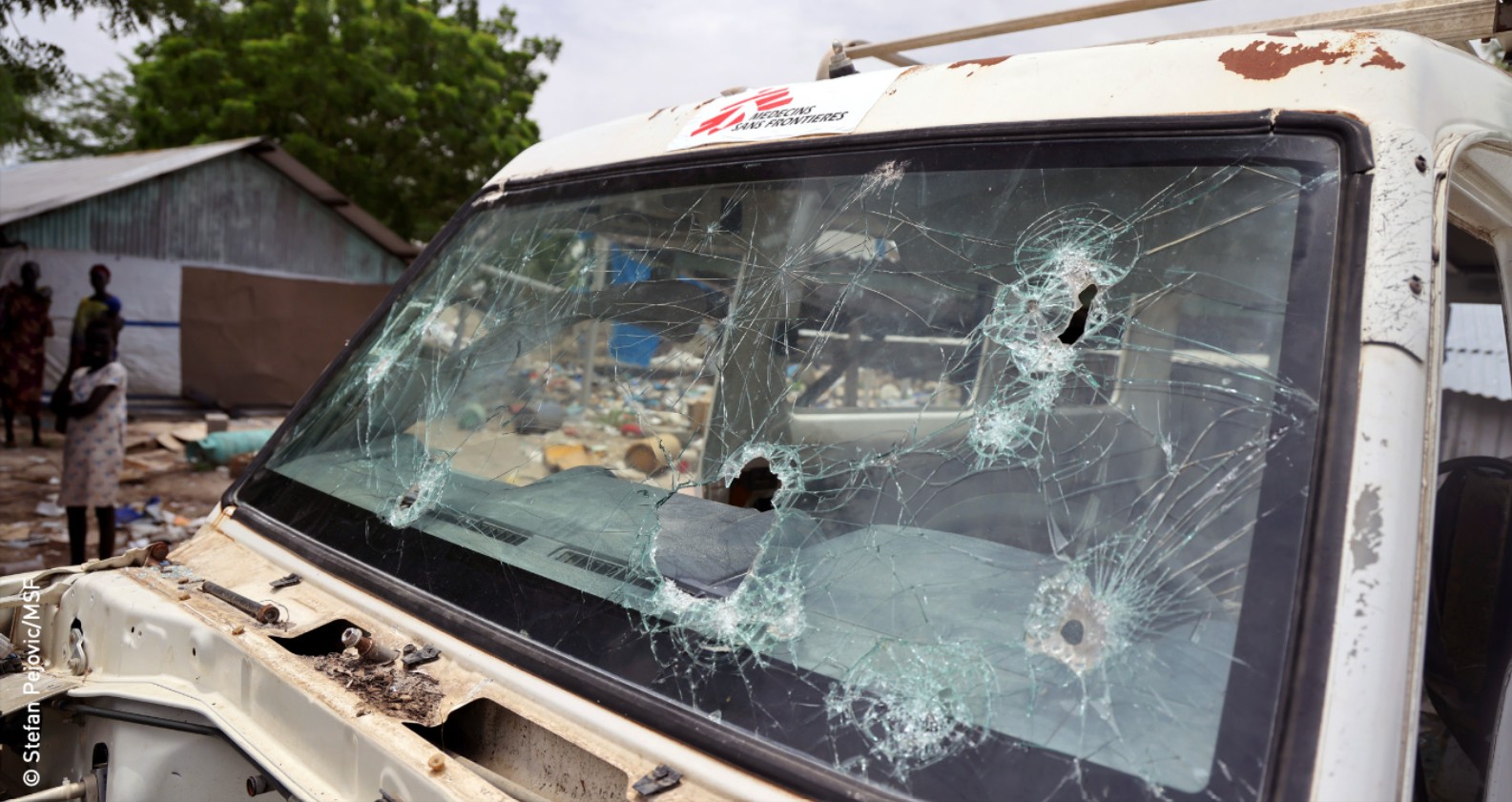
On the night of 3 February 2026, a bomb was dropped on a warehouse within an MSF (Médecins Sans Frontières) hospital in Lankien, South Sudan, injuring two staff members. It was not a mistake: MSF had shared the GPS coordinates of all its facilities with the government and received confirmation that their locations were known. Earlier that day, the attack was announced, and critically ill patients had been discharged, including patients requiring oxygen and women in labour. After the bombing, the hospital was looted, and all medical supplies were destroyed. [1]
Since late December, the hospital had been run solely by local MSF and Ministry of Health (MoH) staff because international MSF personnel were denied access. Despite limited staff and supplies and an increased workload from conflict-related injuries, they continued to provide care. Lankien Hospital served around 250,000 people and, in this remote area of South Sudan, MSF was the only healthcare provider. The hospital had operated continuously for 31 years. [2,3]
The attack forced the hospital to close permanently. Staff fled into the bush, leaving the local population without access to medical care. As one staff member recalled, “After we entered the forest, the soldiers followed us. We managed to escape. The soldiers were shooting the big gun into the bush for about an hour. A lot of people died at that place. It was devastating.” [3]
This was not an isolated incident. In South Sudan alone, there have been 12 attacks on healthcare facilities or staff of MSF since 2025, and 32 MSF staff members have been killed since 2011. [3]
Sudan
In Sudan, what is unfolding is not a healthcare system under pressure. It is one being systematically demolished. Also here, the highest price is paid by those who remain: the nurses, cleaners, administrators, doctors, and communities who stay, because this is their country and their home, and they have nowhere else to go.
Between April 2023 and late 2024, Insecurity Insight documented 519 attacks on Sudan’s health infrastructure. [4] In October 2025, Rapid Support Forces (RSF) stormed the Saudi Maternity Hospital in El Fasher and reportedly killed 460 patients and their companions. Health workers were abducted. [5] According to the Aid Worker Security Database, between 2021 and 2025, locally hired staff accounted for 98% of aid workers killed worldwide. [6] They are the backbone of humanitarian healthcare. They are also its most exposed members with the least protection, the least media attention, and no evacuation plan.
An MSF coordinator working in Sudan said it plainly: “International humanitarian law is dead there.” [5] That was not a statement about international staff, but a statement about the consequences for the people who never left.
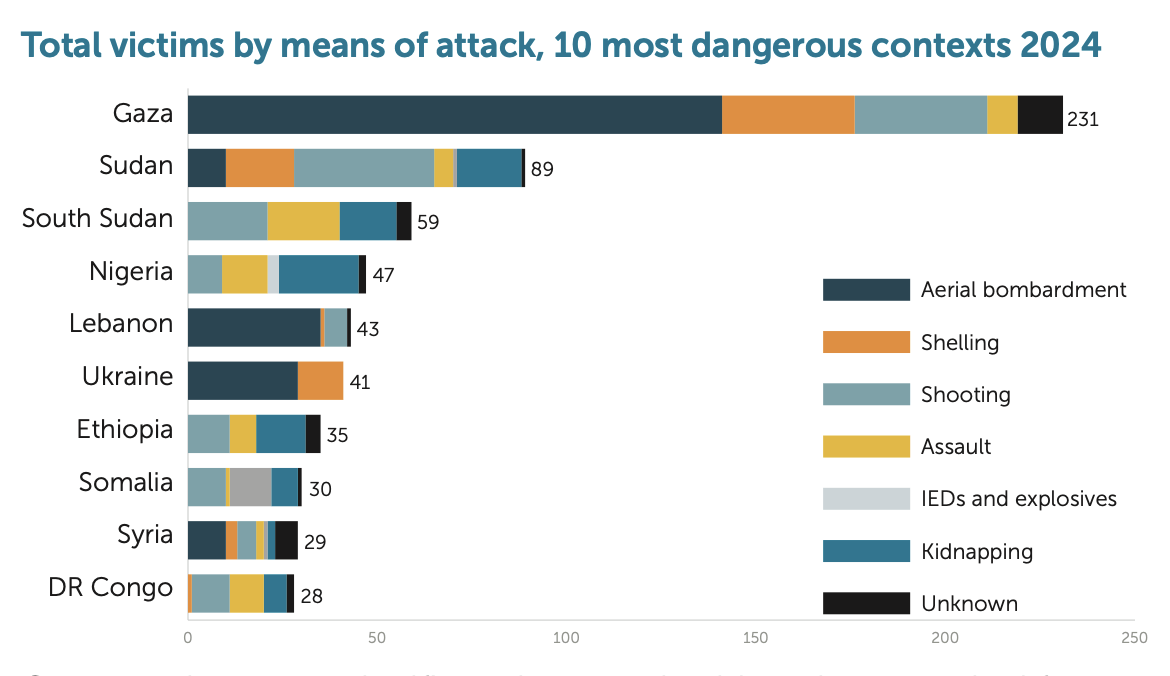
Figure 1. Overview of the most dangerous contexts. [7]
A resolution with no teeth
May 2026 marks ten years since the UN Security Council unanimously adopted Resolution 2286, a landmark resolution condemning attacks on healthcare in conflict and demanding accountability. [8] It called for investigations and an end to impunity. The resolution was adopted by all permanent Security Council members, including states that have since been implicated in attacks on healthcare or have supplied arms to parties responsible for them.
Yet attacks on healthcare have not declined. Instead, they have increased year after year under the watch of the institution that pledged to prevent them. The Safeguarding Health in Conflict Coalition recorded more than 3,600 incidents in 2024 alone, 15% more than in 2023 and 62% more than in 2022. [9] The following year, the WHO documented 1,403 attacks on healthcare facilities, resulting in 1,984 deaths, more than double the 945 deaths recorded in 2024. [10] These figures do not reflect a system gradually failing, but one collapsing in plain sight, documented year after year by the UN’s own monitoring bodies without any meaningful consequences.
The Geneva Academy of International Humanitarian Law and Human Rights warned in its 2024 report that international humanitarian law is facing a profound crisis. According to the report, violations have become persistent and widespread, while state indifference and inaction are contributing to the erosion of norms intended to protect civilians, the wounded, and other non-combatants. [11]
UN Secretary-General António Guterres has similarly reported that the rise in attacks on healthcare is driven largely by state actors. [12,13] These are the same governments that sit on the Security Council, vote on resolutions, and violate the laws they are bound to uphold. UN bodies tasked with ensuring accountability are increasingly documenting violations committed by states they cannot or will not hold accountable. [13]
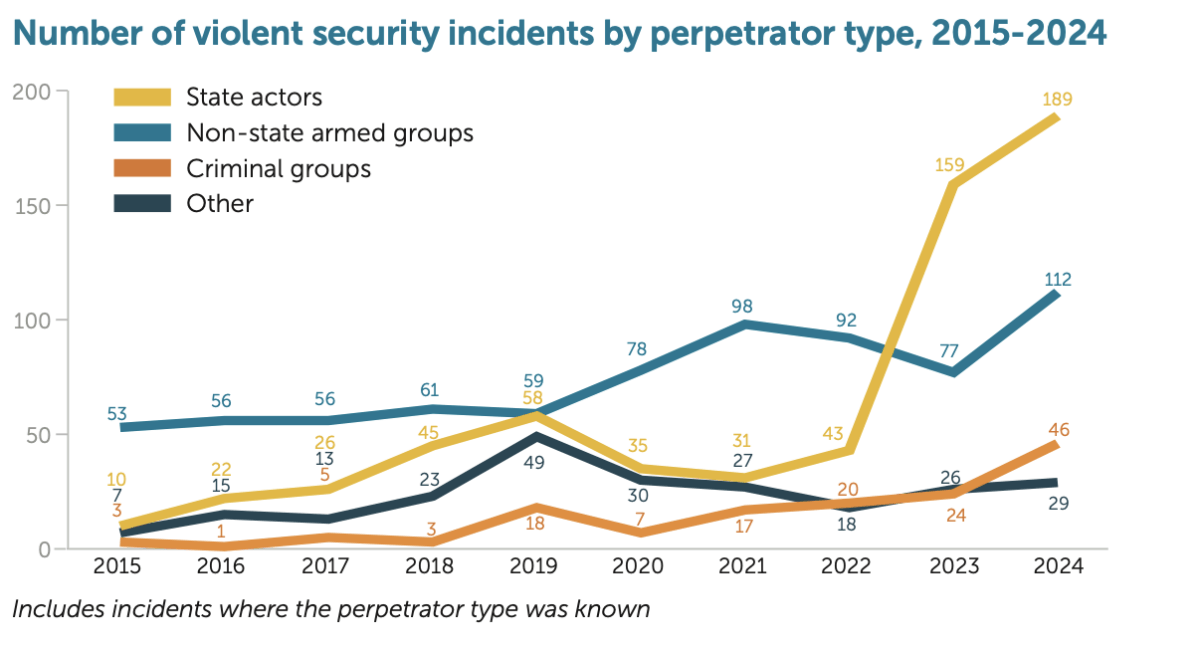
Figure 2. Number of violent security incidents by perpetrator type. [7]
Resolutions, it turns out, do not protect warehouses or hospital wards, nor the 250,000 people around Lankien, nor the national medical healthcare workers and civilians in Sudan who have nowhere else to go. Resolution 2286 did not provide protection, but paperwork. Ten years of violations have continued without any Security Council member facing real consequences. The architecture of accountability was built without a foundation.
What we know
The legal framework is not the problem. The Geneva Conventions are clear: medical facilities, staff, and patients are protected during armed conflict. Unless a hospital is used for hostile acts, it may not be targeted under any circumstances. [8] This is not a legal grey area but customary international law, binding on states and armed groups alike.
When GPS coordinates have been shared in advance, and a hospital is bombed regardless, the issue is not ignorance but intent. That distinction matters because it shows that more documentation, reporting mechanisms, or resolutions will not solve the problem. Those responsible already know the rules and have concluded that violating them carries no meaningful consequences.
For us as global health physicians, witnessing the impact on patients and local healthcare workers is heartbreaking. Healthcare facilities should remain safe spaces for civilians, regardless of the circumstances.
Silence is not neutral
Global health physicians occupy a special position. We are trained to care for individual patients but often work in settings where health systems can collapse within hours. In Sudan and South Sudan, we witnessed what happens when the last functioning hospital in a region closes. Patients do not go elsewhere. They die elsewhere – quietly, uncounted, absent from datasets that can only exist where functioning health systems remain.
Our silence is therefore never neutral. It is a choice with consequences. We are not diplomats; we cannot pass resolutions or sanction governments. But we can bear witness to what we have seen, and we can reject the language of helplessness that often surrounds these discussions. What we observed in Sudan and South Sudan is not an unfortunate by-product of modern warfare. It is the result of deliberate choices by individuals and governments who have concluded that they will not be held accountable.
What needs to happen
The Safeguarding Health in Conflict Coalition’s 2025 report calls for a new global alliance of states committed to coordinated diplomatic pressure against attacks on healthcare. That is worth supporting. So is the demand that states reject the expanding legal interpretations being used to justify attacks on hospitals under claims of military necessity. [14,15] The independent Dutch government advisory body on foreign policy and international affairs (AIV) drafted concrete recommendations to invest capital, together with like-minded states, to confront warring parties, despite possible diplomatic consequences. [16] These are crucial and viable policy options for the government to act upon.
But recommendations alone are not enough. The parties carrying out these attacks need to believe that evidence is being kept and will be used. It requires sustained pressure on these individuals and institutions, through independent documentation bodies and courts, so that a bombed hospital is treated as a war crime instead of a number.
Resolution 2286 was adopted unanimously. The coordinates were shared. The bombs fell anyway. Ten years is long enough to call this what it is: not a failure of law but a failure to act.
References
- MSF. MSF forced to close Lankien hospital, South Sudan. April 2026. https://www.msf.org/msf-forced-close-lankien-hospital-south-sudan
- MSF. Medical care in the crosshairs. January 2026. https://www.msf.org/attacks-medical-care-armed-conflict-reach-record-levels
- MSF. They Killed Them While We Were Running: Escalating Violence in South Sudan. 19 May 2026. https://www.msf.org/report-escalating-violence-south-sudan
- Insecurity Insight. Attacks on Health Care in Sudan, 25 December 2024 – 07 January 2025. ReliefWeb. https://reliefweb.int/report/sudan/attacks-health-care-sudan-25-december-2024-07-january-2025
- Health Policy Watch. Attacks On Healthcare: Devastating New Norm As Hotspots Like Sudan Are Overlooked. March 2026. https://healthpolicy-watch.news/attacks-on-healthcare-escalating-crisis/
- MSF UK. MSF report reveals record level of attacks on medical care in armed conflict. (Aid Worker Security Database figures, 2021–2025.) https://msf.org.uk/article/msf-report-reveals-record-level-attacks-medical-care-armed-conflict
- Humanitarian Outcomes. Aid Worker Security Figures. August 2025. https://humanitarianoutcomes.org/sites/default/files/2025-08/HO_AWS-Figures_0825_E.pdf
- ICRC Casebook. UN Security Council Resolution 2286 on Attacks on Hospitals. Adopted 3 May 2016. https://casebook.icrc.org/print/pdf/node/21030
- Physicians for Human Rights / Safeguarding Health in Conflict Coalition. Attacks on Health Care in War Zones at All-Time High in 2024. (Report: Epidemic of Violence.) https://phr.org/news/attacks-on-health-care-in-war-zones-at-all-time-high-in-2024-safeguarding-health-in-conflict-coalition-shcc/
- World Health Organization. Surveillance System for Attacks on Health Care (SSA). https://extranet.who.int/ssa/Index.aspx
- Geneva Academy of International Humanitarian Law and Human Rights. WarWatch: IHL in Focus Report 2024–25. January 2026. https://geneva-academy.ch/wp-content/uploads/2026/01/WarWATCH-IHL-in-Focus-Report-2024-25.pdf
- Human Rights Watch. Global Failure to Protect Right to Health in Conflict. May 2026. https://www.hrw.org/news/2026/05/29/global-failure-to-protect-right-to-health-in-conflict
- United Nations Security Council. Report of the Secretary-General. 2026 May 7. Report No.: S/2026/390. https://docs.un.org/en/S/2026/390
- Health and Human Rights Journal. A Decade of Failure: Attacks on Health Care Ten Years After Resolution 2286. June 2026. https://www.hhrjournal.org/2026/06/04/a-decade-of-failure-attacks-on-health-care-ten-years-after-resolution-2286/
- Barten DG, et al. Attacks on healthcare in conflict-affected countries: a comparison of temporal trends. Population Health Metrics. December 2025. https://link.springer.com/article/10.1186/s12963-025-00442-5
- Adviesraad Internationale Vraagstukken; Commissie van Advies inzake Volkenrechtelijke Vraagstukken. Straffeloosheid geweld tegen hulpverleners (Advisory Council on International Issues; Advisory Committee on International Legal Issues. Impunity for violence against aid workers). Den Haag: AIV/CAVV; 12 March2026. https://www.adviesraadinternationalevraagstukken.nl/documenten/2026/03/12/straffeloosheid-geweld-tegen-hulpverleners