
































Main content
Providing high-quality healthcare to people with a migration background remains a persistent challenge in the Netherlands. At the same time, public and political debates on migration have become increasingly polarised, often focusing on numbers, costs, and policies rather than on the people behind them.
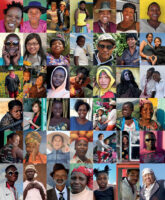
But who do we mean when we talk about ‘people with a migration background’? Labour migrants, asylum seekers, expats? These are highly diverse groups, each with their own circumstances, vulnerabilities, and healthcare needs. What they often share, however, is that accessing and receiving appropriate healthcare requires additional effort from both patients and healthcare professionals.
To explore these complexities, the Dutch Journal of Medicine (NTVG) launched a three-part podcast series focusing on healthcare for labour migrants, expats, and asylum seekers. Through conversations with healthcare professionals, researchers, and people with actual experience, the series examines how social context, legal status, language barriers, cultural differences, housing insecurity, and mental health affect access to care and health outcomes.
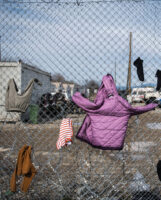
The series builds on previous reporting by NTVG. The article, The invisible price of cheap labour [1], describes a recurring pattern among labour migrants: losing one’s job often means losing housing and social support as well. For many, the healthcare system is inaccessible while struggling with addiction, depression or psychosis, only receiving attention when problems become acute. Research in the Netherlands has also shown that labour migrants face an increased risk of workplace accidents. [2]
Other contributors have highlighted the cumulative burden of psychological trauma among refugees. Many Syrian refugees face unresolved trauma alongside ongoing uncertainty about their future, while access to specialised mental healthcare remains limited. General practitioner Marike Ooms argues that it is precisely this broader context – living conditions, insecurity, language, and cultural barriers – that makes healthcare for asylum seekers particularly challenging. [3] Yet, she emphasises that, under these circumstances, healthcare professionals should always strive to provide the same standard of care for everyone, even when that requires going the extra mile. “These patients should be approached in much the same way as patients who do understand Dutch well. It may just require a bit more time and understanding.” But even expats can struggle to navigate the Dutch healthcare system. Despite being highly educated and fluent in English, many find the system difficult to understand and experience it as a maze of rules, referrals, and expectations. Their experiences remind us not to underestimate how challenging healthcare access can be, even for those who seem well-equipped to find their way.
The podcast series raises important questions about equity, accessibility, and professional responsibility. Why do some groups remain difficult for healthcare services to reach? How can healthcare systems better respond to social and structural vulnerabilities? And what does equal access to healthcare truly mean in practice?
Through this series, NTVG hopes to contribute to a more nuanced conversation about migration and health: one that helps doctors to focus less on numbers and labels, and more on individual people.
Healthcare for migrants: a podcast series on the people behind the numbers
- Episode 1: Labour migrants: a blind spot in healthcare (published 21 May 2026)
- Episode 2: Expats: lost in medical translation (published 2 July 2026)
- Episode 3: Asylum seekers: the toll of uncertainty (will be published on 3 September 2026)
References
- Sikkel R. De onzichtbare prijs van goedkope arbeid (The invisible price of cheap labour). Dutch Journal of Medicine. 18 June 2025
- Nijveldt J. J., Van der Spek W. R., Nijveldt R. J., Van Helden S., Spanjersberg W. R., Houben P., Van der Sluis F. Arbeidsmigranten niet veilig op Nederlandse werkvloer (Labour migrants not safe in Dutch workplace). Dutch Journal of Medicine. 3 September 2024
- Harbers L. Je ziet waar het misgaat, maar kunt het niet oplossen (You see where it goes wrong but can’t solve it). Dutch Journal of Medicine. 25 February 2026