




































Main content
Antimicrobial resistance (AMR) is a major global health threat, responsible for an estimated 1.27 million deaths annually and disproportionately affecting low- and middle-income countries (LMICs). While effective interventions such as infection prevention and control (IPC), antimicrobial stewardship (AMS), and microbiological surveillance are well established, their implementation can be lagging. Following the 2015 WHO Global Action Plan on AMR, most countries developed national action plans (NAPs), yet progress in LMICs has been constrained by limitations in governance, infrastructure, financing, and technical capacity. Laboratory systems often lack trained staff, reliable infrastructure, quality assurance, and effective clinician–laboratory interfaces, while IPC and AMS efforts are hindered by overcrowding, inconsistent access to supplies, limited availability of quality-assured antibiotics, and weak regulatory environments. Interventions developed in high-income settings frequently exceed the resource capacity of low-resource contexts.
A mismatch exists between antibiotic prescribing patterns and antimicrobial resistance (AMR) research efforts. While most antibiotics are prescribed in low- and middle-income countries (LMICs), most AMR research is conducted in hospitals in high-income countries (HICs). This discrepancy underscores the urgent need to strengthen microbiological capacity in LMICs. Robust AMR research is essential to sort out region-specific resistance mechanisms, establish evidence-based antimicrobial stewardship, and identify novel targets for new antibiotic development.[1] Closing this implementation gap requires context-adapted strategies grounded in behavioural and implementation science, with a strong focus on local capacity building. Although local healthcare teams often possess the motivation and contextual insight to drive change, they may lack access to specialised expertise needed to translate evidence into practice.
The Specialized Program for Infectious Disease Care Everywhere (SPICE)* addresses this gap by providing free expert mentorship to hospital teams facing infectious disease issues. After hospitals indicate their need for support, SPICE matches teams to one of their volunteer experts. Together, they work on a small-scale quality improvement project for 12 – 18 months. Through on-site and remote mentorship, SPICE supports the sustainable, locally led implementation of proven interventions, without replacing local ownership or responsibility.
Reflections on AMR stewardship in Somalia
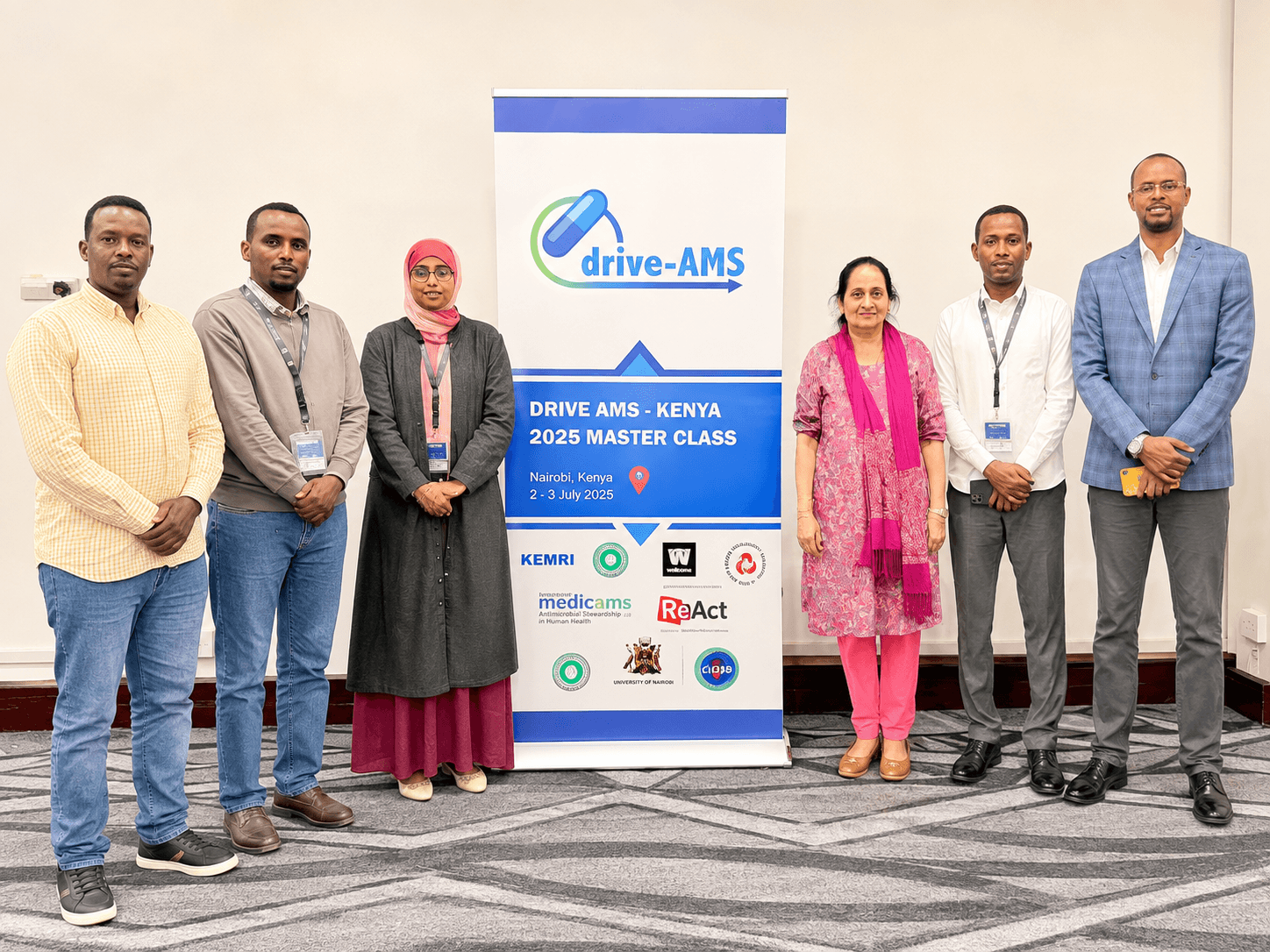
Photo 1: Dr. Muktar B. Matan (second from the right) in the drive-AMS Masterclass, with colleagues; Dr. Ibrahim M. Ali; Dr. Ilham O. Gelle; Prof. Gunturu Revathi; Dr. Ali M. Samatar; Mohamed M. Shobow
Dr. Muktar Baryare is an infectious disease specialist and paediatric intensive care physician at the Banadir National Public Referral and Teaching Hospital for Maternal and Child Health Care and the Midrar Institute of Public Health in Mogadishu, Somalia. He faces the reality of antimicrobial resistance daily. In November 2025, he participated in the drive-AMS Masterclass, a 4-day course aimed at providing AMS teams with practical tools on how to implement stewardship interventions (Photo 1). Since then, he has been working with a SPICE expert mentor to analyse local resistance data and develop practical antibiotic prescribing guidelines tailored to the hospital context. We spoke to him to hear more about AMR in a Somalian context and his team’s efforts to address high resistance rates with support of a SPICE expert mentor.
“Working in a post-conflict setting with a fragile health system and large population of internally displaced persons (IDPs), I witness the consequences of antimicrobial resistance every day. Resistance among common pathogens such as Escherichia coli, Staphylococcus aureus, and Klebsiella pneumoniae is alarmingly high, reaching up to 97% for ampicillin and 61.8% for ceftriaxone [2], with alternative treatment options often unavailable. Diagnostic capacity is severely limited: blood cultures are rarely available, healthcare workers are not aware of local treatment guidelines, and basic laboratory supplies such as antibiotic discs are scarce. Weak governmental regulation allows antibiotics to be widely sold without prescription, further accelerating resistance, while patients who cannot afford private care have no effective referral options.”
“Despite these constraints, there is strong motivation for change at Banadir Hospital. After participating in a regional drive-AMS Masterclass, my team and I recognised the urgent need for locally adapted frameworks to guide antibiotic use but lacked the technical support to implement them. Through SPICE, we gained access to experienced mentorship in antimicrobial stewardship in fragile, low-resource settings. Since November, the team has completed and analysed two point-prevalence surveys, generating the first local data to support the development of hospital antibiotic guidelines. Furthermore, we conducted two AMS-workshops for public hospitals in Mogadishu. These initial steps aim to improve prescribing consistency and lay the foundation for a sustainable stewardship programme, demonstrating that even small, feasible interventions can have meaningful impact in high-burden settings.”
Over the coming months, dr. Muktar and the team at Banadir will prepare the expansion of activities to other hospitals in Somalia, including regular AMS ward rounds, prescription audits with feedback, and implementing hospital-specific antimicrobial treatment guidelines.
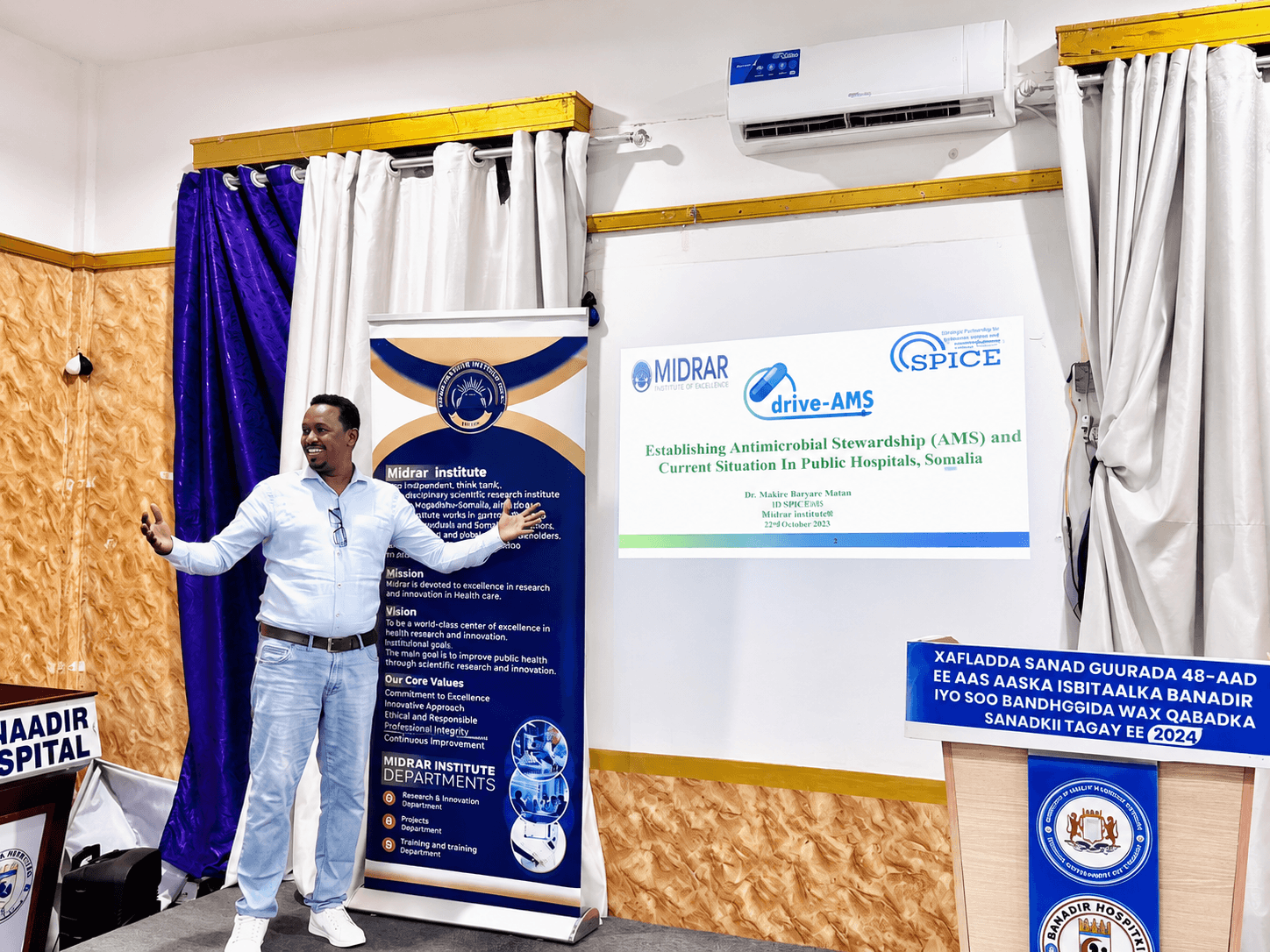
Photo 2: Dr. Muktar B. Matan during AMS-workshop in Mogadishu
Conclusion
AMR is a global public health threat that can only be tackled with a multi-faceted approach and ample resources from a diversity of disciplines. A lack of expertise or scarcity of resources should not be an obstacle in this process. Combining expertise from contexts that are successful in infectious disease management with local knowledge and insight can guide and enhance local interventions. This approach helps to ensure that best practices are followed and sustainably embedded in infectious disease care that is available and affordable for all. To conclude, the SPICE program shows that expert mentorship can be an effective mechanism to strengthen healthcare capacity in low-resource settings.
Further info on SPICE
The SPICE programme (spice-global.org) is open to hospital teams seeking support for infectious disease and AMR challenges, ranging from diagnostics and laboratory strengthening to clinical practice, operations, and governance. Through SPICE, teams are matched with qualified expert mentors who provide targeted support in problem analysis and project design, addressing immediate challenges while strengthening local capacity for sustainable improvement. More information on SPICE, including how to request support or contribute expertise, is available via the SPICE platform at www.spice-global.org.
© Photo Credits: Abdikadir M. Muhiadin
References
- Pato I, Hänscheid T, Carrasco J. New Antibiotics, Old Problems: Advances in Therapy, Limits at Global Scale https://globalhealthperspectives.com/article/new-antibiotics-old-problems-advances-in-therapy-limits-at-global-scale: Global Health Perspectives; February 6, 2026 [Accessed 16 April, 2026]
- Ibrahim AM, Mohamed LM, Aweis ADH, Fidow SQ, Mohamed FA, Osman SM, et al. A five-year retrospective analysis of antimicrobial resistance patterns in clinical bacterial