
































Main content
As populations age worldwide, healthcare systems face growing challenges in addressing the needs of increasingly diverse older populations, raising new questions about health equity, social inclusion and culturally appropriate care. Close to 12 percent of the Chinese population in the Netherlands is estimated to be older than 65 years of age. [1] As this elderly population continues to grow, many face challenges that often remain unseen including language barriers, social isolation, cultural differences and limited access to healthcare and social services. [2, 3] The challenge is to ensure services that are accessible, culturally responsive and trusted by the community. Tien Yan, an organisation in the Netherlands established in 2018, aims to address these challenges. The organization offers a community-based approach to healthy aging among the Chinese migrant populations, aiming for a more inclusive model of care for the elderly.
Barriers facing elderly Chinese adults
There are several barriers affecting the health and well-being of Chinese immigrants in the Netherlands. Language remains one of the most significant challenges. As many arrived decades ago working long hours, there was little time left to learn Dutch or to build a wider (Dutch) social network. Limited language proficiency in Dutch can restrict access to healthcare information, complicates communication with health care providers, and reduces engagement with preventive health services. Additionally, health literacy may also be affected, making it difficult to navigate the complex healthcare and social welfare systems.
Moreover, as retirement approaches, experiencing social isolation and loneliness becomes common among older migrants. As mentioned above, many had little time to build a social network, and their world becomes even smaller as they age. Research has demonstrated that these factors are associated with increased risk of depression and anxiety, cognitive decline, cardiovascular disease and premature mortality. [4-6]
Finally, cultural factors can also influence healthcare utilization. Filial piety was shown to influence mental health. [7] However, mental health, dependency, or seeking external support are often not discussed, even within family, due to possible stigma. This can lead to a delay in reaching out for help. Healthcare services may also not be culturally or linguistically equipped to meet these needs.
A community-based solution: Tien Yan
The World Health Organisation (WHO) emphasizes that healthy aging depends not only on medical care; it is also determined by environments that enable social participation, equitable access to services, and functional ability. Community organisations can play an important role in improving these determinants among the older population.
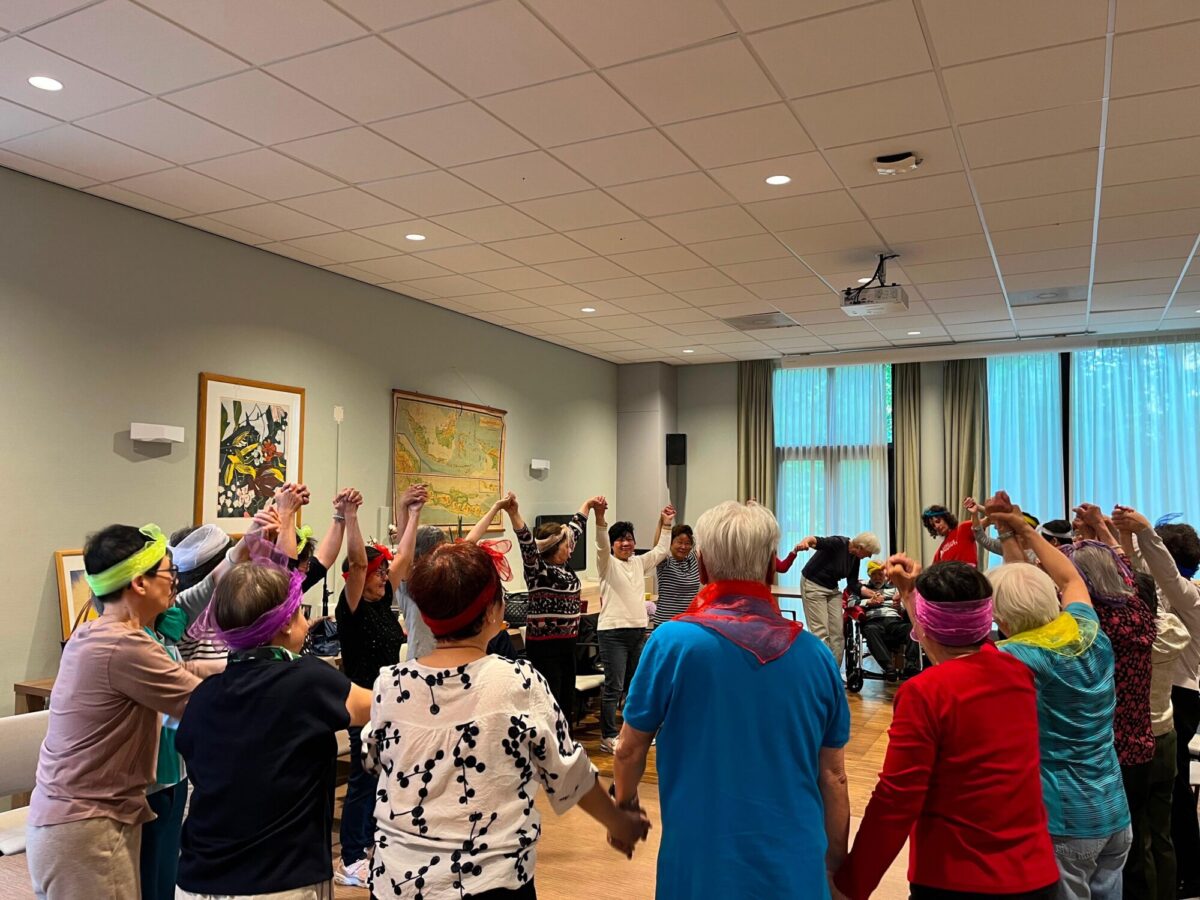
Tien Yan was founded to support Chinese adults living in the Netherlands. The program aims to reduce loneliness and strengthen resilience by building social networks/participation in Dutch society, as social participation has been seen to function as a protective health intervention. [6] It organizes gatherings, educational and recreational activities, cultural events, and community programs to connect older adults to peers who share similar cultural and linguistic backgrounds. This environment enables older adults to maintain social relationships while receiving practical information regarding health and wellbeing. These activities contribute to building trust, an essential factor in effective health care engagement. In summary, social connections are strengthened, participation is fostered, and barriers to support services are reduced.
Rather than functioning as a healthcare provider, Tien Yan functions as an intermediary to formal institutions. Staff and volunteers help individuals navigate healthcare systems, social services, and administrative processes. Due to this support, elderly Chinese report improved access to care, hopefully reducing the gap between the Chinese community and health and social services.
Volunteering experience
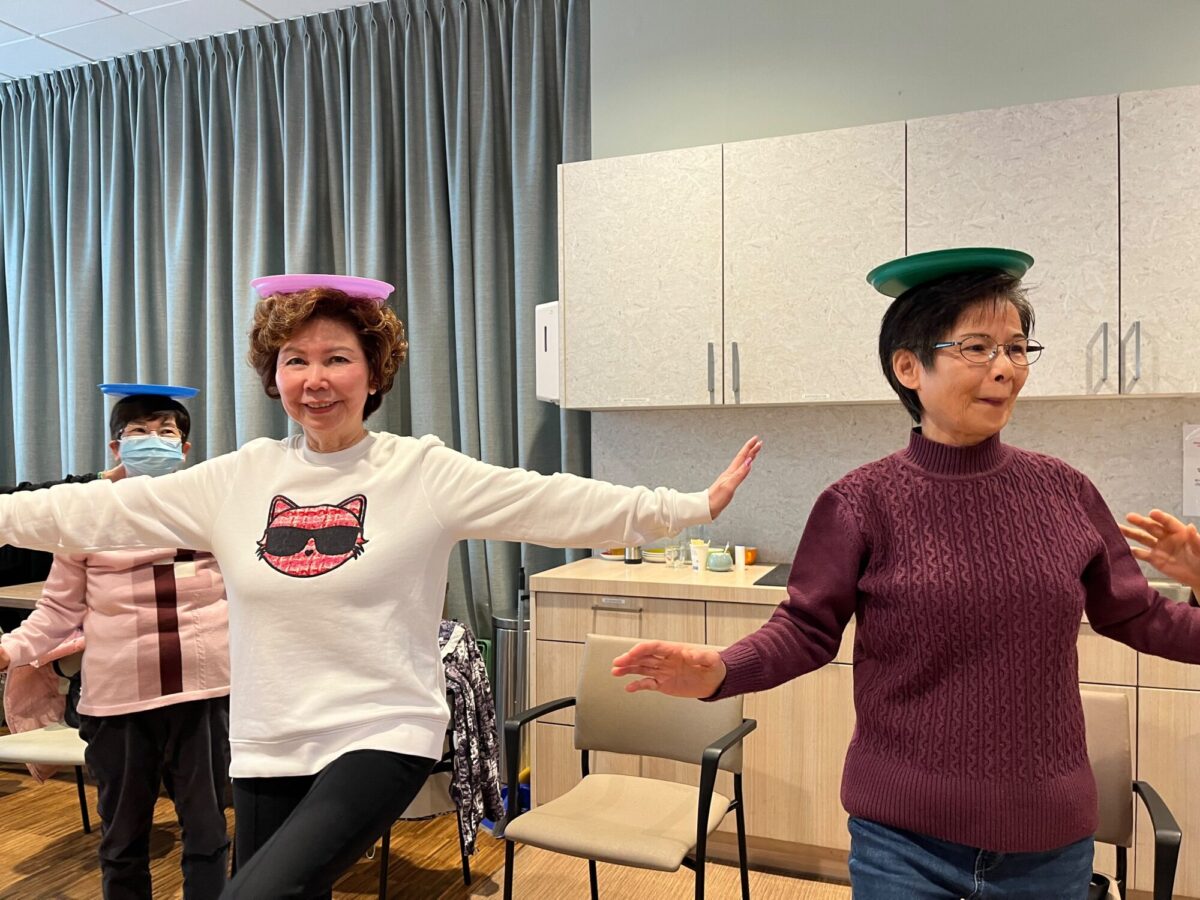
As a second-generation Chinese migrant, I have seen the struggles of the aging population first hand: letters that need to be translated, small social networks, and misunderstood hospital policies due to consultations without official interpreters. This motivated me to start volunteering at Tien Yan. With a few other volunteers, I help organize activities, assist in tasks, and/or translate for participants. The overall aim is to improve their social network and participation.
The volunteers at Tien Yan come from different professional backgrounds and generations but all share a common goal: helping people live healthier, make connections, and improve social engagement. At the weekly gatherings, I see the elderly enjoying their time together. For some, the activity is the highlight of their week. In this welcoming environment, they are open to learn and to engage in social discussions. Due to the trust built, they even shared their vulnerabilities in a national theatre performance called Smaken van Gevouwen Herinneringen (Tastes of folded memories). These moments remind me that volunteering is not only about aiding, but more importantly it is about building human connections.
Besides improving my own Cantonese and Mandarin language proficiency, Tien Yan made me a better communicator in general. It also helped me gain a deeper understanding of the culture and the challenges older adults can face. In turn, my own (professional) experience helps older adults gain more insight and trust in health care.
Improving healthy aging within the migrant population must be culturally appropriate and can be achieved by a community-based approach. With this approach, Tien Yan can be valuable in all lines of healthcare, where it can partner with various organisations (e.g. the general practitioner, public health (GGD), municipalities etc.) and have a bridging role between healthcare and social welfare. Via collaborations, they can improve various aspects ranging from prevention to long-term (medical) care. I would recommend volunteering for an organisation with a community-based approach to every (health) professional as it helps provide insight into (cultural) challenges and improves equity in (social) health care.
For more information or an impression of the Tien Yan organisation, please visit www.tienyan.nl
References
- Van Hedel, K, van Houdt K, Dieleman D. Inwoners van Chinese herkomst; De sociaaleconomische positie van personen van Chinese herkomst in Nederland (Residents of Chinese ethnicity; The social-economic position of persons of Chinese ethnicity in the Netherlands). 2026. https://www.cbs.nl/nl-nl/longread/aanvullende-statistische-diensten/2026/inwoners-van-chinese-herkomst/1-bevolking
- Liu CH, Ingleby D, Meeuwesen L. Barriers to health care for Chinese in the Netherlands. Int J Family Med. 2011;2011:635853.
- Aparício SL, Duarte I, Castro L, Nunes R. Equity in the Access of Chinese Immigrants to Healthcare Services in Portugal. Int J Environ Res Public Health. 2023 Jan 30;20(3):2442.
- Chen W, Zhao X, Xu T, Fang L, Hong C, Xie Y, et al. Network of anxiety and depression symptoms in older Chinese adults living alone: a cross-sectional study. Front Psychiatry. 2025;16:1576964.
- Guarnera J, Yuen E, Macpherson H. The Impact of Loneliness and Social Isolation on Cognitive Aging: A Narrative Review. J Alzheimers Dis Rep. 2023;7(1):699-714.
- Xia N, Li H. Loneliness, Social Isolation, and Cardiovascular Health. Antioxid Redox Signal. 2018;28(9):837-51.
- Cheung SL, Krijnen WP, Fu Y, van der Schans CP, Hobbelen H. Filial Piety and Mental Health Among Older Chinese Immigrants in the Netherlands. Gerontol Geriatr Med. 2022;8:23337214221083470.
- World Health Organization. From loneliness to social connection – charting a path to healthier societies: Report of the WHO Commission on Social Connection. 2025. https://www.who.int/news/item/30-06-2025-social-connection-linked-to-improved-heath-and-reduced-risk-of-early-death
© Photo credits Tien Yan Organisation, 2026 (except header photo)