







































Main content
Healthy ageing is often approached from a biomedical perspective: adopt healthy habits, detect disease early, receive timely treatment, and extend life. These approaches have become central to modern healthcare, but they also raise a broader question. What can we learn from populations that have already shown us how to age well?
We asked Professor Michel Poulain, a leading demographer in longevity studies and pioneer of the “Blue Zone” concept, to share his reflections on what long-lived communities can teach us about prevention, our social environment, and the future of ageing societies. For more than five decades, Michel Poulain has studied population dynamics, international migration, and, since three decades, longevity. He is currently Emeritus Professor at the University of Louvain (UCLouvain) and Senior Researcher at the Estonian Institute for Population Studies at Tallinn University, Estonia.
From astrophysics to the science of longevity
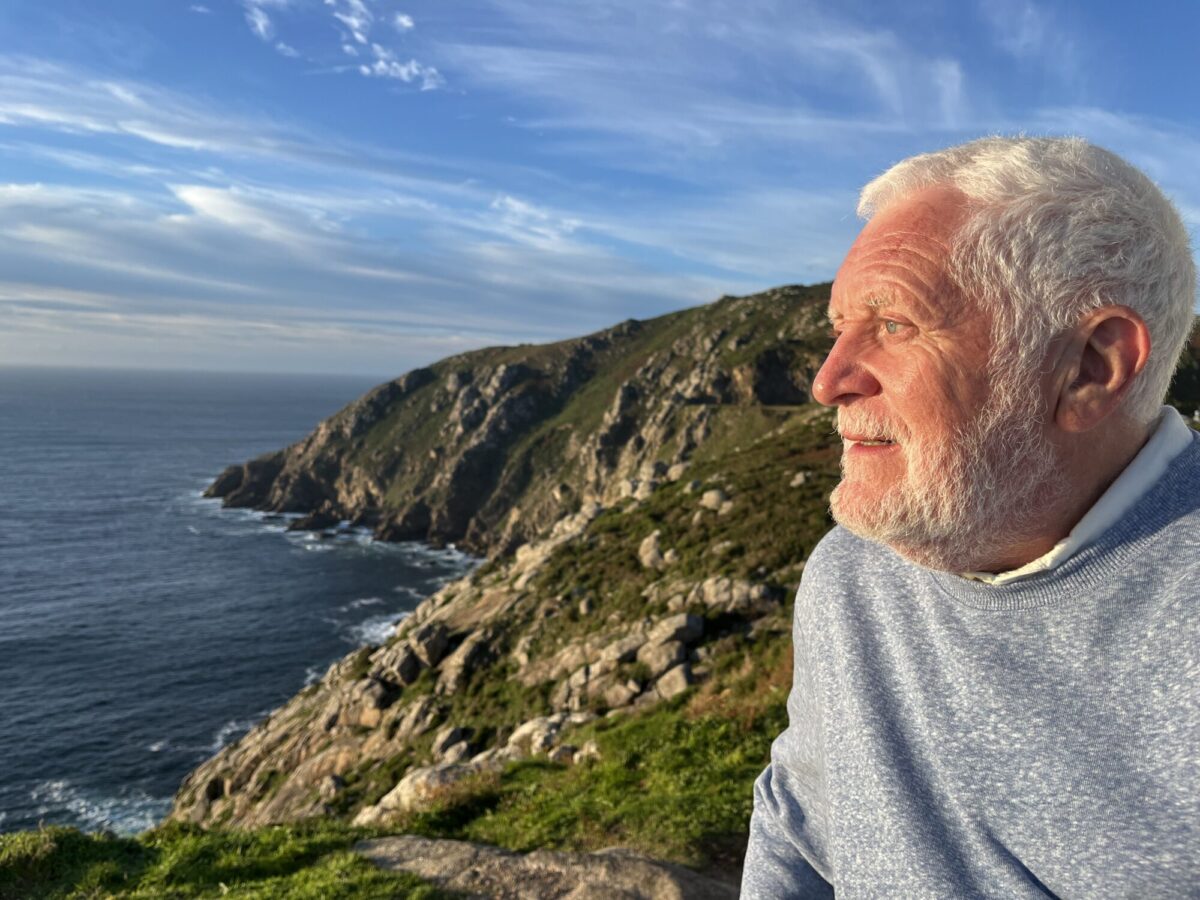
Professor Poulain’s path into the international health sciences was far from conventional. Originally trained as an astrophysicist, he transitioned into demography, driven not by a linear career plan but by curiosity and passion. “When something interesting attracts me”, he explains, “I cannot keep myself outside of it.”
His first encounter with demography came through migration studies, where he developed expertise in international migration statistics. But his career took an unexpected turn when, in 1992, he became interested in a different demographic phenomenon: exceptional longevity. While rigorously validating the age of centenarians in Belgium and later in Sardinia, he began to ask why some communities had remarkably high numbers of people reaching very old ages.
Rather than focusing only on individual characteristics, he looked for patterns at the population level. Where did these people live? What environments shaped their lives? And what could these communities reveal about ageing well?
Looking back on his unusual scientific journey, Poulain sees curiosity as the common thread. Moving from astrophysics to demography, and from migration studies to longevity research, he followed questions wherever they led him. For him, scientific progress often begins by paying attention to what others may overlook.
The discovery of blue zones
In 1999, during an international meeting on centenarians held in Montpellier, a team of researchers from Sassari in Sardinia presented their research, reporting an unusually high number of centenarians, particularly men. This presentation had raised skepticism among demographers, and they decided to send Poulain, a world-recognised specialist in age validation of centenarians, to Sardinia. Contrary to expectations, Poulain’s fieldwork confirmed the data. Birth and death records were consistent, and the longevity observed was real. More strikingly, centenarians were not randomly distributed; they clustered geographically.
By mapping these clusters, Poulain identified what would later become known as the first “Blue Zone”, a region characterized by exceptional longevity. The term, he admits, was somewhat arbitrary. “I used a blue pen to shape the village on the map. Since then, in the spring of 2000, me and my colleagues talked about Blue Zones.” The first scientific publication followed several years later, in 2004, after extensive validation by colleagues who, unbeknown to him, independently checked his findings.
Following Sardinia, Poulain extended his research to other regions, including Okinawa (Japan), Nicoya (Costa Rica) and Ikaria (Greece). These areas, now widely recognized as Blue Zones, share a common feature: a relatively large proportion of people reaching advanced age, often in good health.
For Poulain, the strength of the Blue Zones concept lies in the demographic method behind it. The key question was not simply where older people lived, but where they were born. “The big change with Blue Zones is that it is obtained when you report the newborn by the place of birth. This is important because the genetic pool is determined by the place of birth, early-life conditions are linked to the place of birth, and traditions and lifetime experiences are also linked to the place of birth. The place where you live when you are very old may be completely different. You may have migrated somewhere else, but the main variables explaining longevity are linked with the place of birth.”
As the Blue Zones concept became increasingly popular, it also entered the world of media and commercial interests. Poulain, however, has remained focused on the scientific foundation of the idea. He is careful to distinguish his work from simplified interpretations, returning repeatedly to the same point: the purpose of studying longevity is not to hand out Blue Zone labels, but to understand why some communities succeed in supporting longer and healthier lives.
Beyond longevity: what does healthy ageing really mean?
The study of Blue Zones changed the way Poulain thinks about longevity. It shifted the focus from individual risk factors towards the environments and relationships that shape people’s lives over decades. As Poulain’s research expanded from Sardinia to other longevity areas over the decades, his aim remained the same: “to compare these places” and understand what they could reveal about the conditions that support long and healthy lives. But his work also led him to question a common assumption in ageing research: that living longer is automatically the ultimate goal.
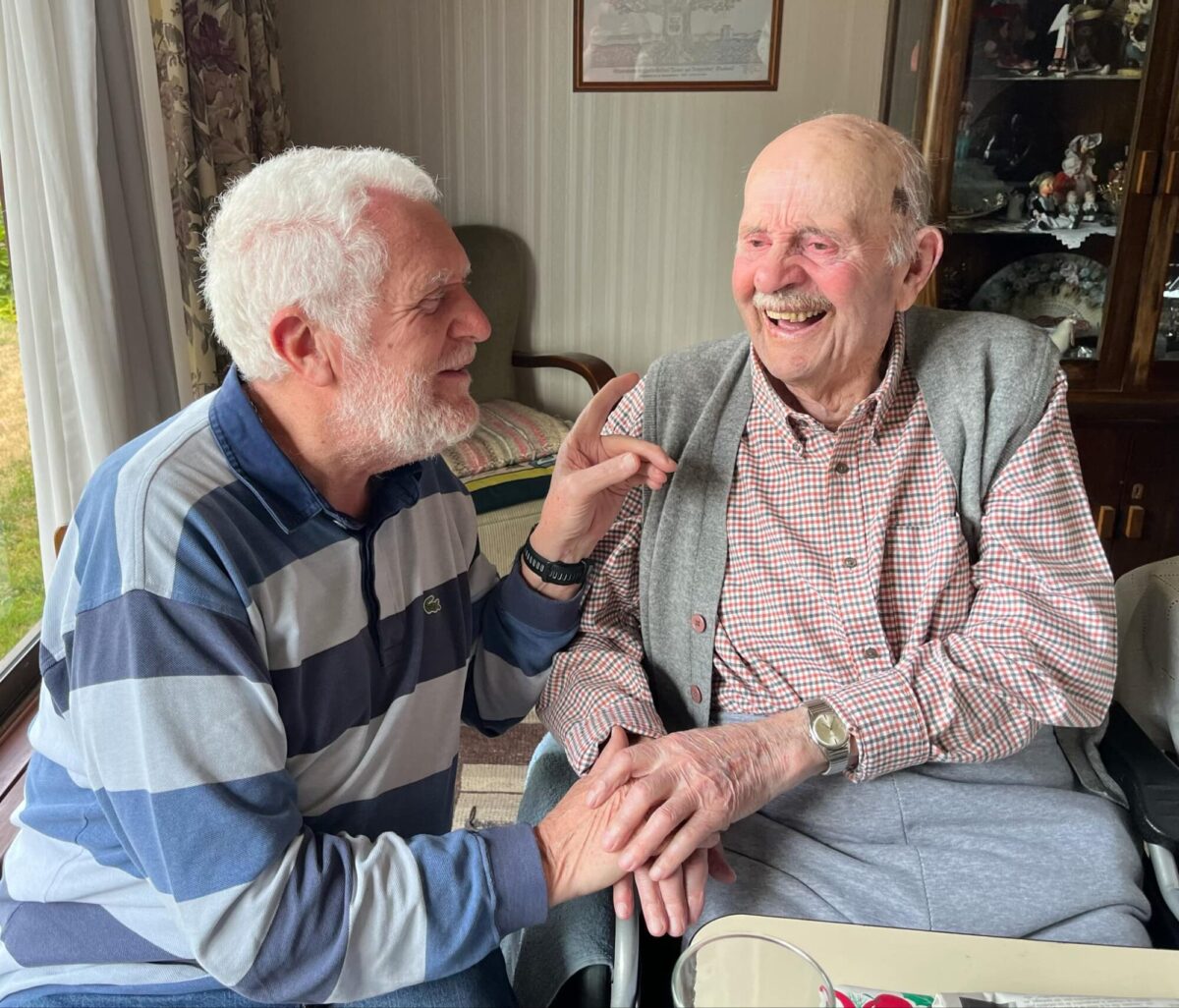
“I don’t believe in transhumanism that explains that we will live to 150”, Poulain states. For him, longevity only has value when people remain involved in life. In Sicily, he recently met a 102-year-old man who was still reading books, summarising each chapter, and following current affairs on television. “These are persons that are still involved in society and well supported by the family and the community”, he explains. At the heart of Poulain’s perspective is a simple yet profound definition of healthy ageing. It is not merely about extending lifespan, but about maintaining quality of life. “Living longer is not the most important”, he says. “The most important is to live happily and in good health.”
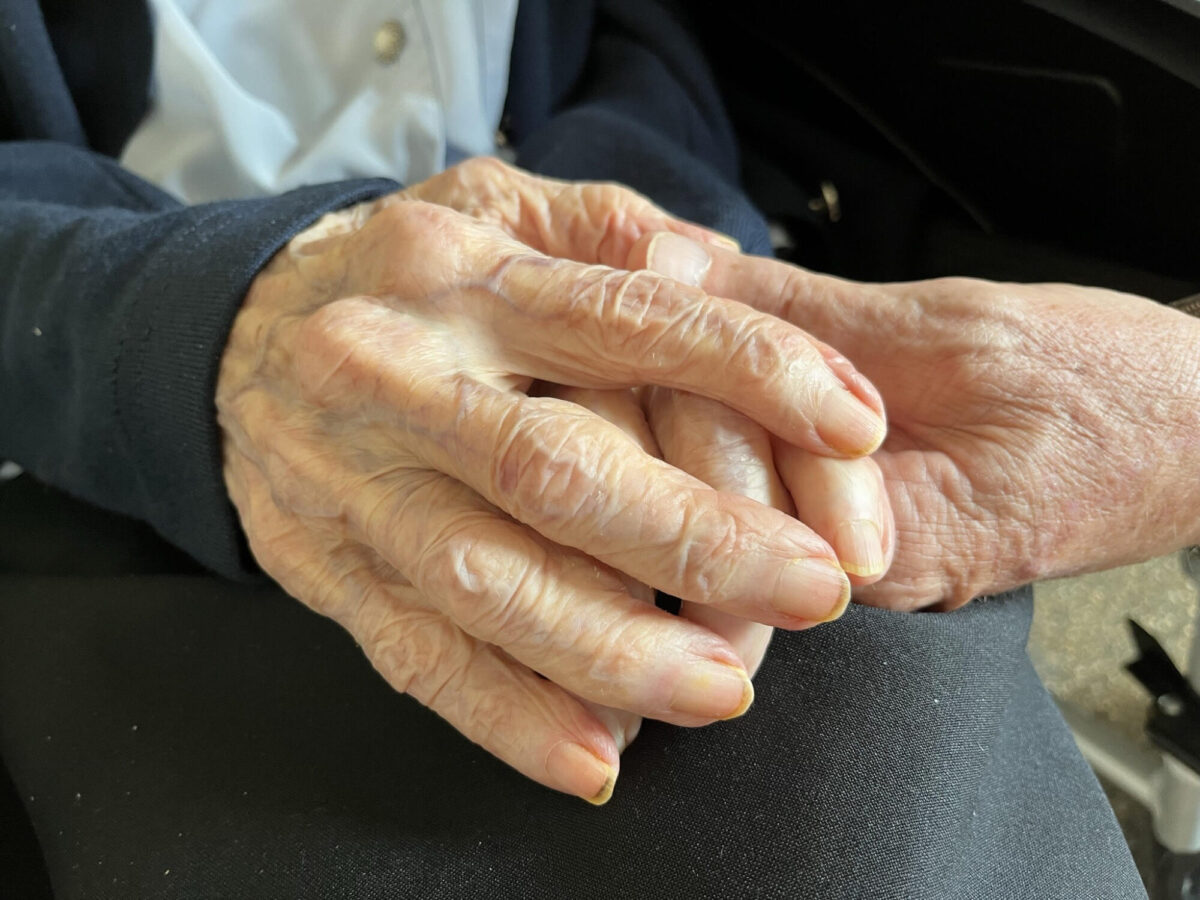
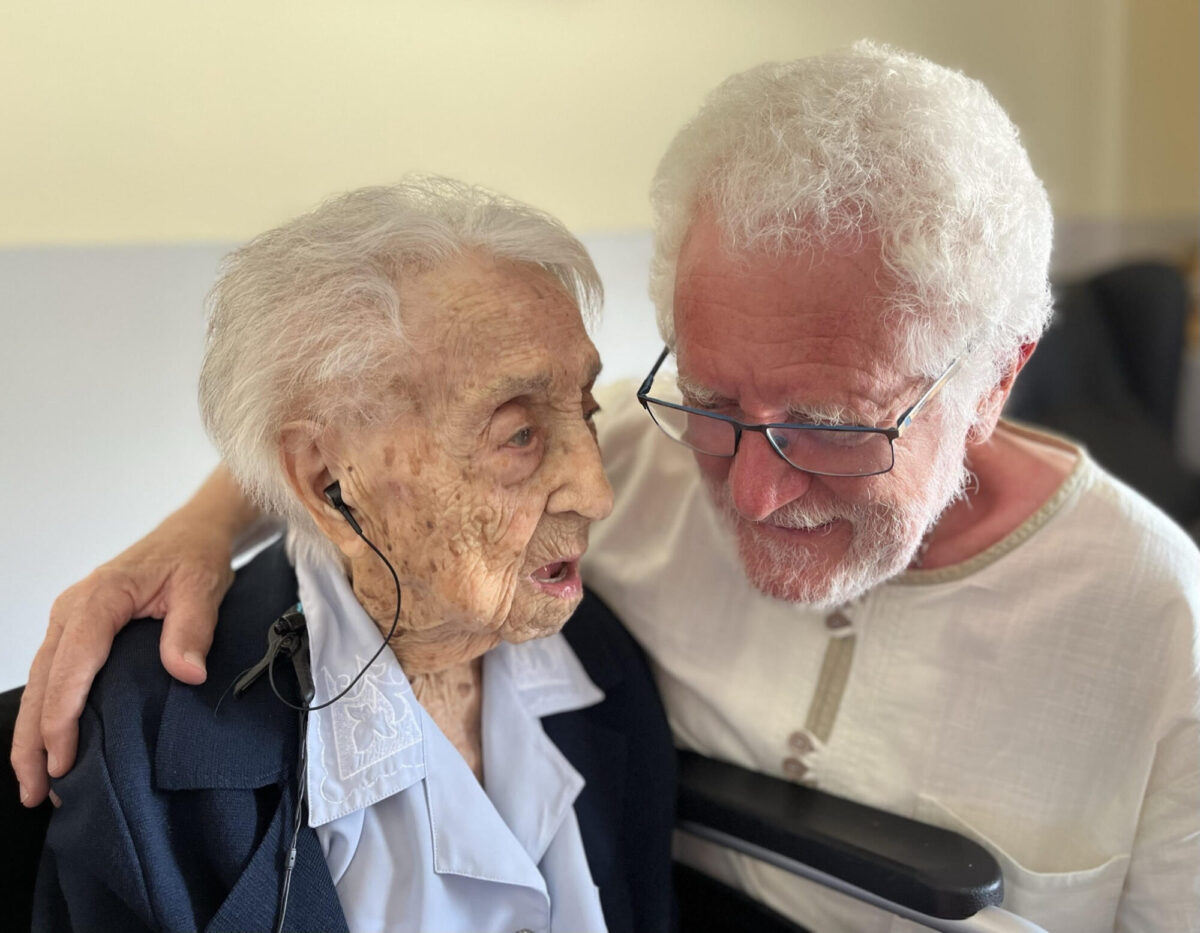
One encounter shaped this view more than any other. In 2023, in Olot, Catalonia, Poulain visited Maria Branyas, who at 117 years old was the oldest person in the world at that time. He initially observed how other researchers participating in this visit approached ageing: by asking her questions about diet, habits, and lifestyle factors. Maria did not react a lot, only nodding to answer the questions. But, when taking a group photo, he took her hand and the interaction changed. “As soon as I took her hand, she turned her face to me and started to talk”, he recalls. “At that moment, I understood that the human dimension of ageing is one of the most important, even above health.”
For Poulain, the human dimension of ageing can be captured in two principles: “live” and “love”. He argues that the first priority is “don’t forget to live and not only to survive.” To live, with a capital L, means “to be yourself, to continue to live” and remain engaged with the world around you. The second principle is love: recognising that “you are not alone on this earth and have a lot of others around you.”
These two principles, Poulain argues, go beyond the usual discussions about diet, exercise, or other longevity interventions. He is sceptical of the growing number of individual recommendations promising extra years of life. “If you eat a potato every day, you will gain two years of life expectancy. If you walk half an hour per day, you will also gain three”, he explains. But when all these recommendations are combined, “You will not live 20 years more.” For Poulain, healthy ageing cannot be reduced to a collection of habits. It depends on whether people continue to live with purpose, connection, and a sense of belonging.
The seven principles of longevity: from individual lifestyle to social medicine
After more than three decades studying communities with exceptional longevity, Poulain gradually shifted his focus. Rather than continuing to search for new Blue Zones, he began asking a different question: how can our modern societies create the conditions that allow more people to age not only longer but better and happier?
His answer is the concept of “Living Blue Zones”. It is not a programme that individuals can simply follow by changing a few habits. “Living Blue Zones is not a status, it’s not a situation at any moment. It is a process, something that should change in society”, Poulain comments.
The seven principles he identified bring together the different dimensions he repeatedly observed in longevity areas: healthy food, physical activity, stress management and sleep, family relationships, community, respect for nature, and having a purpose in life. For Poulain, their strength lies precisely in their combination. “The seven principles are really a block”, he says. “I don’t want to push one of these and ignore the other ones. All should go together.” Recently, he created a non-profit association named LIVING BLUE ZONE, whose main objective is to promote the seven Blue Zone principles and support all initiatives aiming to disseminate the lessons of the Blue Zones (www.livingbluezone.org).
The missing element from other healthy aging frameworks, according to Poulain, is the human dimension. Family and community are central parts in his approach. In the villages he studied, he found that older people were rarely separated from everyday life. “Nobody goes to a nursing home”, he explains. “They are either in the family, or the community takes care, the neighbour, and so on.”
For Poulain, the final principle may be the most personal one: having a purpose in life. This purpose can take many forms. For some, it may be linked to spirituality or religion; for others, it may come from caring for others, contributing to the community, or maintaining a positive outlook on life. “Be yourself. Be yourself. And don’t forget that you are not alone”, he says.
Poulain sees this sense of purpose reflected in the longevity cultures he studied. In Costa Rica, it is expressed through pura vida; in Japan, Okinawa, through ikigai. Although these concepts differ, he observes a common pattern among people who age well. They remain open, connected, and engaged with the world around them. “They age without stress and quietly”, he notes. For Poulain, purpose is therefore not a personal achievement to pursue in isolation, but something that grows from relationships, identity, and belonging.
Designing healthier societies: the role of policy, urban planning, and physicians
Poulain’s work ultimately leads to a question that goes beyond individual health behaviours. What kind of societies allow people to age well? When asked what he would do if he had unlimited resources to create a healthier community, Poulain immediately turns to the way we design our living spaces. He points to the Netherlands as an example of a country that has started to develop housing “favourable for social contact”. But he adds an important qualification.. “To put the bricks is not enough. Then when the bricks are there, you have to ensure that the people inside will contact each other and so on.”
For Poulain, a neighbourhood should be built in such a way that it creates opportunities for relationships. He is critical of residential environments that unintentionally isolate people, describing high-rise buildings where residents pass through several barriers before reaching their homes and may never meet their neighbours. “So please, let’s try to make people interact together”, he adds.
For ageing societies, this has major implications. As people grow older, healthcare systems often focus on expanding medical services and long-term care capacity. Poulain argues, however, that prevention needs to begin much earlier and much more broadly. “Prevention should start at birth, because the ageing process starts at birth”, he comments. And that the factors that influence later life will be shaped through childhood, family, education, environment, and social relationships.
This perspective also changes the role of physicians. Doctors remain essential for diagnosing disease, managing risk factors, and supporting people with complex health needs keeping in mind that prevention is the main objective to live longer and better and in good health. And Poulain’s message invites healthcare professionals to look beyond the consultation room and consider the wider conditions that determine whether people can remain healthy and connected.
For him, the future of healthy ageing depends on cooperation between healthcare, policymakers, urban planners, and communities. The challenge is not only to care for an ageing population, but to build societies where people can continue to participate, contribute, and feel that they belong throughout their lives.
The future of longevity: technology, AI, and the human dimension of medicine
When discussing the future of ageing societies, Poulain does not reject scientific progress. In fact, he sees an important role for innovation, including new medical technologies and artificial intelligence. But he remains cautious about the idea that technology alone will allow humans to overcome the limits of ageing. “I don’t believe that we will be able to live to 110, or more.” For him, the greatest gains will not come from endlessly extending lifespan, but from preventing disease and creating healthier conditions earlier in life. “If there is more progress on the prevention part, it will be even easier”, he explains. Treating advanced disease is often expensive and complex; preventing illness before it develops offers a more promising path.
At the same time, Poulain worries that modern societies are changing in ways that may undermine some of the very factors that support healthy ageing. Although he sees reasons for optimism, especially among younger generations who are interested in creating healthier communities, he is also concerned about the growing influence of commercial interests, unhealthy environments, and technologies that can weaken social connections. “Society is changing at an exponential rate now, really exponential,” he says. “Where are we going?”
Artificial intelligence illustrates this tension. Poulain is not opposed to AI. “I use artificial intelligence. It’s a good tool”. And he sees opportunities, as AI can take over repetitive tasks, help professionals process large amounts of information, and support doctors in making better decisions. In the future, he believes family physicians may use AI to access knowledge and receive advice based on extensive data. But he draws a clear distinction between information and human interaction. “The human dimension of the family doctor is to convince the person that something has to be changed, and this is something artificial intelligence cannot do”.
This may be one of Poulain’s most important messages for physicians working in increasingly digital healthcare systems. The future will undoubtedly bring more digital tools, more automation, and more sophisticated medical knowledge. But these advances will only contribute to healthier ageing if they support, rather than replace, the human foundations of health: relationships, communities, and a strong sense of purpose.
Throughout his career studying longevity, Poulain has returned to one central question. What can we learn from populations that have already found ways to age well? His answer is not found in a single intervention or a simple formula for living longer. It lies in the environments people grow up in, the communities they build, and the relationships they maintain throughout life. For healthcare professionals, the lesson from the Blue Zones is therefore broader than prescribing healthier behaviours. It is a reminder that healthy ageing is shaped long before a person enters a consultation room. The challenge for the future is not only to add years to life, but to create societies in which people can remain connected, valued, and able to live fully throughout the years.
© Pictures courtesy of Michel Poulain, except header picture.