













Main content
Effective medicines can improve health outcomes, but only if they are of good quality, are available and affordable for patients when needed, and prescribed and used properly. These challenges are at the heart of the NSGH–KCGH–OIG symposium, “Essential = Essential: On access, quality and the rational use of medicines”, taking place on 18 November 2026 in Utrecht, the Netherlands.
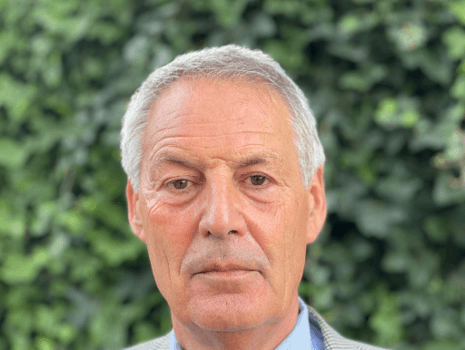
Ahead of his opening address, Soraya Verstraeten spoke with Professor Hans Hogerzeil about the experiences that shaped his career and what it takes to ensure that an “essential medicines policy” includes “equitable access for all patients”.
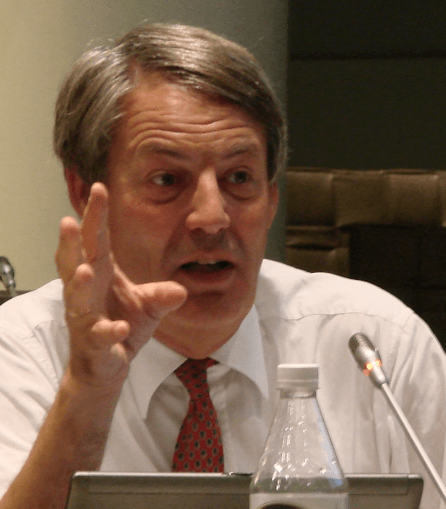
A former WHO Director for Essential Medicines and Emeritus Professor of Global Health at the University of Groningen, Hogerzeil is now Co-Chair of the Lancet Commission on Accelerating Progress on Essential Medicines. Drawing on a career spanning clinical practice, healthcare management, international policy and scientific research, he reflects on the progress made over the years and the practical choices still needed to ensure that people in all parts of the world can access the medicines they need.
From childhood ambition to a career in global health
Hans Hogerzeil was about twelve when he decided to become a doctor working in Africa. His role model was his uncle, a mission doctor who worked with people affected by leprosy in Africa and Asia. In 1974, he and his future wife joined his uncle in India for a clinical elective. They spent several months working in a hospital serving a deeply impoverished population. For Hogerzeil, this experience confirmed his career choices.
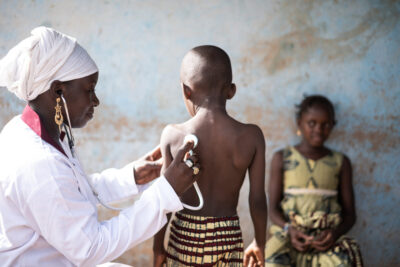
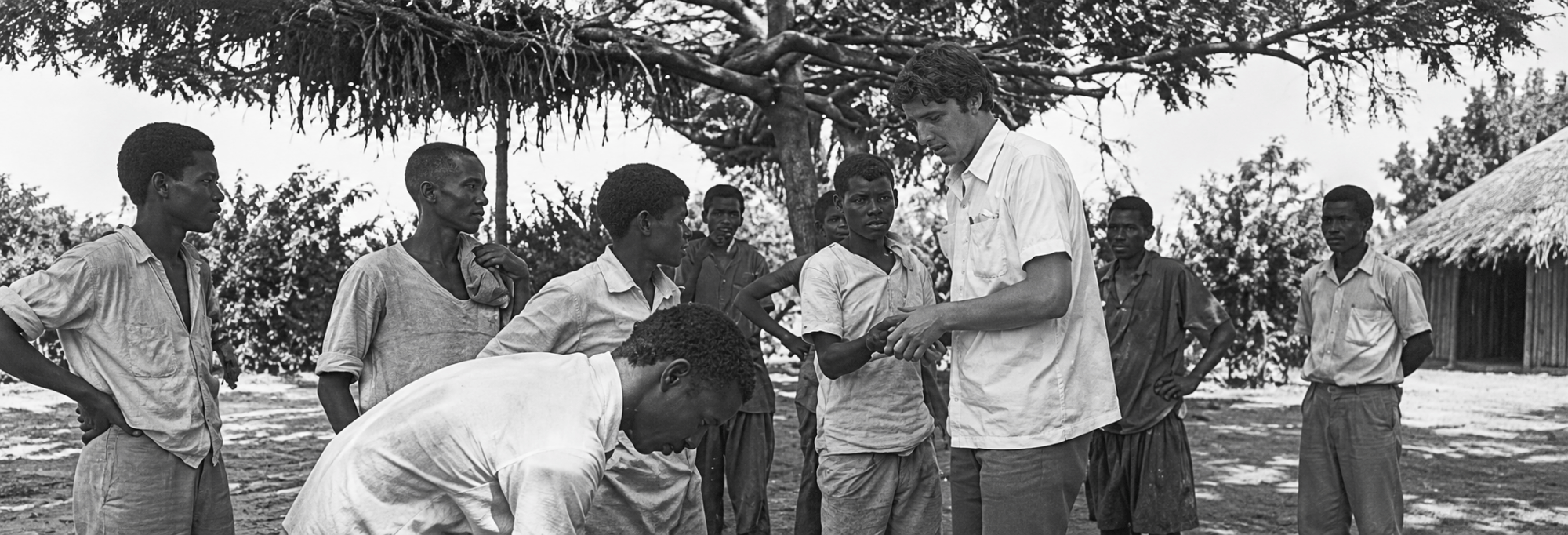
After completing his medical studies and training in surgery, obstetrics and tropical medicine, he was sent out to Agogo, Ghana, where he worked for four and a half years as a general medical doctor for the Presbyterian Church of Ghana. The hospital had around 220 beds and six doctors, including a paediatrician, a surgeon and an ophthalmologist. Their specialist services attracted patients from across the country, while the hospital also provided introductory training for doctors arriving from the Netherlands to work in the smaller mission hospitals.
The clinical workload, Hogerzeil recalls, was immense. Hundreds of outpatient consultations were shared every day among a small number of doctors, alongside ward rounds, surgery and complex obstetric care. Training nurses to take on some consultations helped, but the demand remained high.
During these years, he also began to consider how he could perhaps better contribute through research, teaching and management. He became deputy director of the hospital and took responsibility for its medicine supplies. That decision would gradually lead him towards the field that shaped the rest of his career: access to essential medicines.
His years in Ghana remained foundational for his later work. “I would recommend to anyone working in global health to first spend time working in healthcare,” he says. When discussing policy at the World Health Organization, he could draw on his own experience working in low-resource healthcare environments. “They could never say to me, ‘You are only a bureaucrat from Geneva’”.
How much medicine does a hospital need?
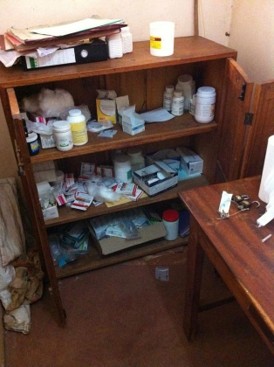
Taking responsibility for the local medicine supplies brought Hogerzeil into a different area of healthcare. In Ghana, political and economic instability had made medicines difficult to obtain. The hospital relied on supplies purchased from abroad, including through the International Dispensary Association, a non-profit organization based in Amsterdam. Donor support made these purchases possible, but deciding what to order and in what quantity required information that was not readily available.
The questions were practical. Which medicines did the hospital need? In what quantities? And how could future demand be estimated? As Hogerzeil became involved in the medicines committee of the Church Hospital Association of Ghana, these questions expanded beyond Agogo to a network of 66 faith-based hospitals.
A large donation offered Hogerzeil and colleagues the opportunity to plan and coordinate the supplies for all 66 faith-based hospitals and health centres in the country. The committee planned to make a joint request and distribute the medicines amongst the various facilities. Using consumption data from Agogo and one other hospital, Hogerzeil and colleagues estimated the quantities required for all hospitals. Six months after the distribution, he visited most of the hospitals to compare the estimates with the actual consumption.
This work became the basis of his doctoral research on the standardized supply of essential medicines in Ghana. For Hogerzeil, following the process from planning through to evaluation was particularly rewarding. “It was an enormous privilege to be involved from beginning to end,” he recalls. He later approached WHO, hoping to compare his medicine consumption data with those from other African countries. The response surprised him. “We have nothing,” he remembers being told. “You are the first.”
His findings attracted interest, and the encounter eventually led to an invitation to work with WHO. One of his early tasks was to help develop WHO’s guidance on estimating medicine requirements, the same problem he had worked on in Ghana. Looking back, Hogerzeil considers himself fortunate in how his career unfolded. The responsibility he had taken on within one hospital opened a path into international research and policy.
Essential effective affordable
At WHO, at first in the Eastern Mediterranean region and later in Geneva, Hogerzeil’s work expanded from estimating medicine requirements to helping determine which medicines national health systems should prioritize. For him, the essential medicines concept brings together two principles: equity and effectiveness. A carefully selected range of effective medicines for all, including insulin, paracetamol and antibiotics, helps countries meet their populations’ priority health needs while making effective use of limited resources.
Initially, the WHO selection was based on efficacy, safety and low price. The concept was implemented globally, with countries determining their own lists according to their needs. “But in the end, it’s not about choosing the cheapest medicine,” Hogerzeil explains. “You want the most cost-effective medicine, even if it is expensive.”
A particularly important moment came in 2002, when Hogerzeil was secretary of the WHO Expert Committee responsible for the Model List of Essential Medicines. At the time, the high price of antiretroviral medicines had prevented them from being listed as essential. This exposed a problem in the approach to selection. Treatments could be effective and offer good value but remain out-of-reach because they were considered unaffordable.
Working closely with colleagues and non-governmental organizations, including Médecins Sans Frontières, he contributed to a change in the definition of essential medicines. For WHO, high costs alone would no longer prevent medication from being included. An effective treatment should not be excluded from the essential medicines list simply because its high price placed it beyond reach for many people and countries. Instead, inclusion on the list could provide the basis for achieving its affordability. “Affordability changed from being a condition to a consequence of selection,” he elaborates.
A place on the model list is not enough
Hogerzeil takes pleasure in having helped formulate the revised WHO definition of essential medicines, which is still valid. But he also recognises the gap between selecting a medicine and ensuring that patients receive it, which remains a central challenge. Price is one barrier, but actual treatment also depends on the surrounding healthcare services framework . Cancer medicines, for example, also require diagnostic facilities, specialist care services and hospitals equipped to deliver treatment.
The experience with HIV/AIDS showed how much could be achieved through coordinated efforts. Advocacy, generic production and large-scale public financing helped to bring prices down from eight thousand to less than a hundred dollars per person per year, and brought treatment within reach for millions of people. In his 2015 article for MTb, the previous hardcopy version of Global Health Perspectives, Hogerzeil suggested that similar approaches could improve access to medicines for other conditions.[1] When asked about his current expectations, he sees limited progress.
Hepatitis C treatment offers one of very few encouraging examples. He points to countries such as Egypt and Malaysia, where government action and measures facilitating the availability of generic medication helped make treatment more affordable. In contrast to the case of HIV/AIDS, this progress took place without a large global purchasing fund. For Hogerzeil, this shows that middle-income countries can use national policy and available licensing mechanisms to improve access, even in the absence of large-scale international purchasing.
For other types of illnesses, such as cancer and non-communicable diseases, he sees less progress. The tools to address high prices exist, he argues, but governments face considerable commercial and political opposition when they try to use them.
Affordability also takes on a different meaning when treatment continues for years. Medicines for conditions such as diabetes, hypertension and asthma may be relatively inexpensive but may still place an unsustainable financial burden on a household. For someone using insulin, for example, the costs include both the medicine and the supplies needed to monitor blood glucose. A family may manage these expenses fora while but struggle to do so throughout a person’s life.
“Even at relatively low prices, the fact that treatment continues indefinitely can still be catastrophic,” he explains. Lower prices for medicine matter, but so does protection from having to pay the costs directly. That is why Hogerzeil increasingly places access to medicines within a broader prospective. How can countries organize healthcare financing so that people can receive the treatment they need without being pushed into poverty?
From a “human right” to a “system that delivers”
A course on human rights at WHO inspired Hogerzeil to view access to medicines through a broader lens. What he had learned through clinical practice, organizational procurement and international policy could also be understood in terms of human rights. Governments have a duty to progressively work towards the highest attainable standard of health for their people, including access to essential medicines. And the people should be able to hold their government accountable. In some countries, patients have successfully claimed such access through the courts. But delivering on that right basically requires health systems that make treatment routinely accessible.
For Hogerzeil, publicly organised health insurance offers the only way forward. It pools resources so that the healthy subsidise the sick, the wealthy subsidise the poor, and younger people subsidise the elderly. His recommendation is to begin with a basic health insurance package that covers everyone, which then can be expanded once resources and services develop. “A small insurance package for everyone is better than a large package for a few,” he says. Essential medicines lists should guide those decisions, helping countries choose the most cost-effective medicines to cover, while at the same time keeping the system financially sustainable.
Asked what he would do with unlimited resources, Hogerzeil returns to his pragmatic approach. Alongside providing a basic set of essential medicines for everyone living in poverty, which costs only a fraction of the total amount spent on medicines, he proposes investing in technical support to help governments in middle-income countries establish public or social health insurance systems, with public subsidies for those who cannot pay the full premium.
Being ready when change becomes possible
Hogerzeil finds reasons for optimism in his current work as chair of the Lancet Commission on Accelerating Progress on Essential Medicines. The commission is preparing a report to mark the 50th anniversary of the first WHO Model List in 2027. The report brings together experts from different countries and disciplines, with strong female input from low- and middle-income countries. The first commission’s work of 2017 remains relevant [2], he explains, while the new report will address new challenges brought into focus by the recent COVID-19 pandemic and declining international financing from Western countries.
Hogerzeil is encouraged by the commission’s aim to develop practical guidance that helps countries organise access and reduce dependence on international donors. His work together with a younger generation of experts dedicated to health and human rights strengthens his confidence in the future. He sees young colleagues willing to take responsibility and contribute to change, even under difficult circumstances. His own experience has also taught him that progress requires persistence and preparation. Opportunities for change may take time to emerge, but it’s important to keep making the case and to have evidence-based solutions at hand when a political window of opportunity for action arises.
Two important messages
As he prepares to open the NSGH–KCGH–OIG symposium in Utrecht in November, Hogerzeil wants to share two messages for the participants. The first one is that understanding the concept of essential medicines is part of every healthcare provider’s clinical work. The quality and effectiveness of medicines cannot be taken for granted, he says, recalling the example of lifesaving ergometrine for bleeding after delivery that had lost much of its potency because it was kept in full daylight. This example shifts the focus back to the patient: writing a prescription achieves little if the patient cannot afford the medicine or if the quality has been compromised.
His second message is about the relationship between researchers and policy experts. Governments and international organisations need researchers to translate evidence into clear practical advice, and to provide input when political decisions are needed. The coming decades will require a great many evidence-based political decisions on health systems – so the field of essential medicines is an excellent career choice for young global health experts.
Hogerzeil’s reflections leave us with a question for our own work: what can we do to improve access to medicines? The “Essential = Essential. On access, quality and the rational use of medicines” symposium on 18 November in Utrecht offers an opportunity to explore that question with colleagues working across practice, research and policy. Starting with his opening address, the discussion will connect access, quality and rational use with the practical choices professionals face, and the opportunities they have to make a difference.
References
- https://globalhealthperspectives.com/review/access-to-essential-medicines-in-support-of-universal-health-coverage
- https://www.thelancet.com/journals/lancet/article/PIIS0140-6736(16)31599-9/fulltext